Anthurium Care Indoors: How to Grow Glossy Leaves and Repeat Blooms
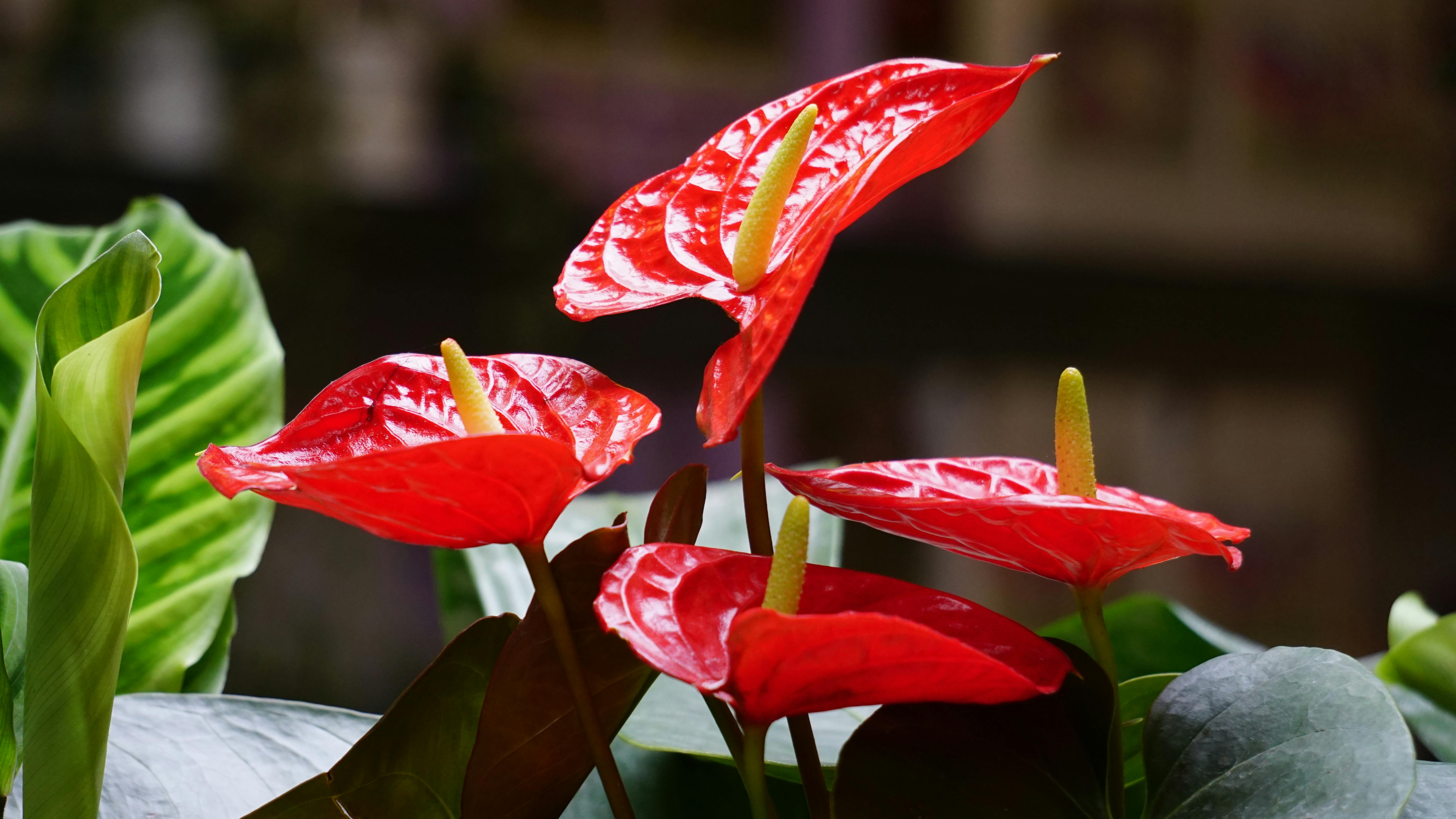
My anthurium spent eight months in a low-light corner of my living room producing exactly zero flowers and a series of increasingly small, pale leaves before I finally moved it. I'd assumed, as many beginners do, that anthuriums were low-light plants because I'd seen them for sale in dim shopping mall displays. They're not — those mall specimens were burning through their existing energy reserves, not thriving. The moment I relocated my plant to a bright, east-facing windowsill, the difference was visible within a month: a new, deep green leaf unfurled, and within six weeks the first flame-red spathe appeared. That was three years ago, and since then my anthurium has bloomed almost continuously, producing a new flower every six to eight weeks. Here's the care framework that made it happen.
Understanding Anthuriums: What You're Actually Growing
Anthuriums belong to the family Araceae and are native to the tropical rainforests of Central and South America. The most commonly grown species for indoor bloom is Anthurium andraeanum, the flamingo flower, whose glossy, waxy spathes come in red, pink, white, orange, and deep burgundy. What most people call the "flower" is actually a modified leaf called a spathe, and the true flowers are the tiny structures on the finger-like spadix that protrudes from it. The glossy leaves themselves — large, heart-shaped, and deep green — are also a major visual feature of the plant, and their condition is a direct indicator of overall plant health.
Anthuriums are epiphytic in their native habitat, growing on trees and rocky surfaces with excellent drainage and aerated root systems. That background is crucial to understanding their soil and watering needs — like orchids and bromeliads, they want a loose, chunky growing medium and roots that dry out partially between waterings. According to the Missouri Botanical Garden's tropical houseplant resources, anthuriums are among the more rewarding flowering houseplants for indoor growers precisely because, given adequate light, they bloom nearly year-round — an unusual trait among tropical flowering species.
Light: The Key to Continuous Blooming
More than any other factor, light determines whether your anthurium blooms or just survives. Anthuriums need bright, indirect light — a position within two to four feet of a south- or east-facing window provides the light intensity they require. A sheer curtain is useful if the plant is right against a south-facing window, to prevent direct midday sun from bleaching the spathes and scorching the leaves.
In inadequate light (medium to low indirect), anthuriums will maintain their leaves but stop producing spathes. If your plant hasn't bloomed in several months, light is almost certainly the limiting factor. A full-spectrum grow light on a 12–14 hour timer positioned 12 inches above the plant works well as a supplement in rooms without bright windows. I've used this approach during winter months in USDA Zone 6 and maintained near-continuous blooming through the entire season.
Reading Leaf Color as a Light Indicator
Anthurium leaves tell you a lot about their light exposure. Deep, glossy green leaves signal adequate light. Pale, yellowish-green leaves in a plant that's not root-bound and not overwatered usually indicate insufficient light. Bleached patches or browning in the center of a leaf indicate too much direct sun — move the plant back from the window or add a sheer curtain.
Watering and Humidity for Glossy Leaves
Anthuriums prefer a watering approach similar to their epiphytic relatives: water when the top 50–75% of the potting medium is dry, then water thoroughly and allow excess to drain freely. I water my anthurium approximately every seven to ten days in summer and every twelve to fourteen days in winter. The thick aerial roots that may develop above the soil surface are normal — they're searching for moisture and airborne humidity.
Never let an anthurium sit in standing water. The roots are prone to rot in saturated conditions, and a constantly wet root ball produces yellowing, stunted growth, and eventual plant collapse. Always use a pot with drainage holes and empty any saucer water within an hour of watering. Gardening Know How's anthurium and tropical houseplant resources consistently emphasize the importance of well-draining conditions for epiphytic tropical plants — a principle I've found to be non-negotiable with anthuriums specifically.
Humidity is important for maintaining leaf gloss and overall plant vitality. Anthuriums prefer 60–80% relative humidity, though they tolerate average home humidity of 40–50% reasonably well. In dry conditions, the leaf edges may develop brown margins and the spathes lose their characteristic gloss. A nearby humidifier or regular grouping with other plants maintains adequate humidity without dramatic intervention. The Spruce's tropical houseplant section provides additional strategies for managing humidity that are worth reviewing if you live in a particularly arid climate or run forced-air heat through winter.
Soil, Feeding, and Repotting for Repeat Blooms
Because anthuriums are epiphytic, they need a chunky, well-aerated potting medium — not standard potting soil, which compacts and holds moisture too readily. My formula: one part standard potting mix, one part orchid bark, one part perlite. This produces a mix that drains immediately, provides physical structure for the roots, and dries at an appropriate rate between waterings. Some growers use straight orchid bark or a peat-free bark-perlite blend with excellent results.
Feed monthly during the growing season with a balanced liquid fertilizer at half strength, or use a phosphorus-forward fertilizer (one with a higher middle number in the NPK ratio, like 15-30-15) to encourage flowering. The phosphorus promotes root development and bloom production. Stop fertilizing in fall and winter when growth naturally slows.
Repot every two to three years, or when roots visibly circle the base of the pot or aerial roots become very abundant. Move up only one to two pot sizes — anthuriums prefer to be relatively snug. After repotting, hold off on fertilizing for six to eight weeks to allow the root system to settle without chemical stress. For companion plant ideas and display inspiration, browse our guide to the best flowering houseplants for beginners. Additional guidance on potting mix options is in our tropical houseplant potting mix guide.
Common Mistakes with Anthurium Care
- Growing in low light and expecting blooms: Without bright indirect light, anthuriums stop producing spathes entirely. Light is the non-negotiable bloom trigger.
- Watering too frequently: Allow 50–75% of the potting medium to dry before watering. Soggy roots cause yellowing and eventual plant collapse.
- Using dense potting soil: Standard potting mix compacts over time and retains too much moisture for epiphytic roots. Use a chunky bark-based mix.
- Placing near cold drafts: Anthuriums are sensitive to temperatures below 55°F. Cold-draft damage appears as blackened, wilted leaves and is irreversible.
- Ignoring aerial roots: Don't cut aerial roots — they're a natural feature of epiphytic plants. You can tuck them into the potting medium where they'll establish, or leave them exposed.
Quick Reference Care Table
| Care Factor | Requirement |
|---|---|
| Light | Bright indirect; 2–4 feet from south or east window; no direct midday sun |
| Water | When top 50–75% of medium is dry; every 7–10 days growing season, 12–14 days winter |
| Soil | Chunky, bark-based mix: potting soil + orchid bark + perlite in equal parts |
| Humidity | 60–80% ideal; tolerates 40–50%; humidifier helpful in winter |
| Temperature | 65–85°F (18–29°C); keep above 55°F; very sensitive to cold drafts |
| Fertilizer | Balanced or phosphorus-forward liquid at half strength, monthly, growing season only |
| Repotting | Every 2–3 years; 1–2 inches larger pot; prefers snug conditions |
| Toxicity | Toxic to cats, dogs, and humans if ingested; sap is a skin irritant |
Frequently Asked Questions
Why are my anthurium leaves turning yellow?
Yellow anthurium leaves usually indicate overwatering, inadequate drainage, or very low light. Start by checking the soil: if it's been wet for more than ten days, overwatering is likely. Check drainage holes for blockage, reduce watering frequency, and ensure the plant is in a bright enough position. If the lowest, oldest leaves are yellowing one or two at a time while the rest of the plant looks healthy, that's normal — anthuriums shed older leaves as they mature.
How long does an anthurium spathe last?
Individual spathes on a well-maintained anthurium typically last six to ten weeks before fading from their original vibrant color to green, then eventually drying and browning. Once a spathe has faded to fully green or begun to shrivel, you can trim it off at the base of its stem. Remove spent spathes promptly — this signals the plant to redirect energy toward producing the next bloom rather than maintaining the fading one.
Can I grow anthurium in a bathroom?
Yes, and a bathroom with a window providing bright indirect light is actually an excellent environment for anthuriums. The elevated humidity from showers directly supports the 60–80% humidity they prefer, and the warmth of a frequently used bathroom suits their tropical temperature needs well. Ensure there is adequate light — a window (even frosted glass allowing bright diffuse light) is essential. A windowless bathroom will not provide sufficient light regardless of its humidity advantage.
Anthuriums are one of the most rewarding flowering houseplants you can grow once you match their care to their epiphytic nature — the right light and the right airy soil medium are the two variables that unlock everything else. If you've just moved your anthurium to a brighter spot or switched to a bark-based mix, tell us in the comments how it responds — we'd love to hear your update in a few months.

About the Author
Written by Sage Avery, a plant care writer at Plant Companion Guide. For how we create and update content, see our editorial policy.