Best Pot for Snake Plant: Size and Drainage
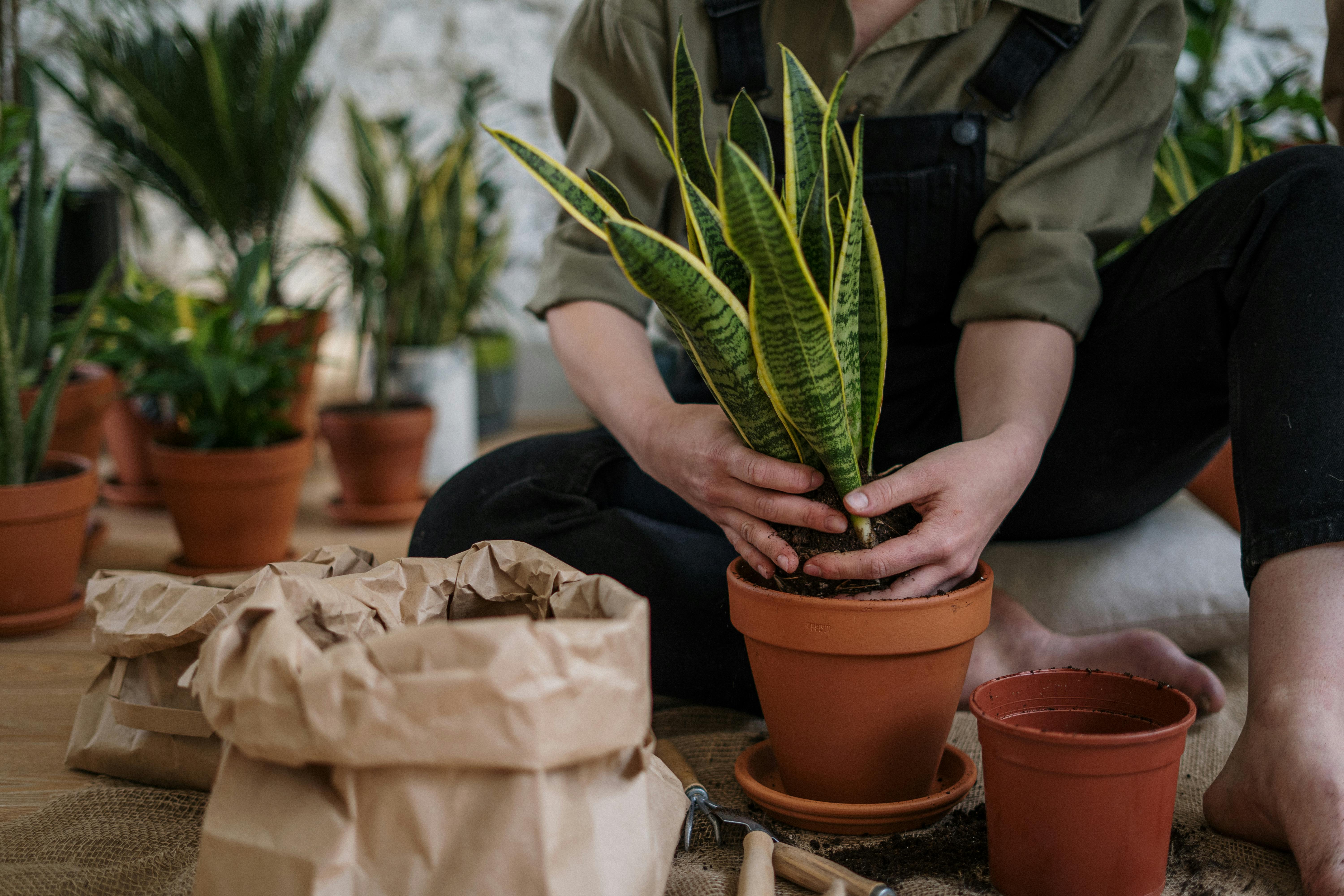
I've repotted my snake plant collection more times than I care to admit — mostly correcting mistakes I made early on. The worst was the beautiful glazed ceramic planter with no drainage hole that I put my Sansevieria trifasciata 'Black Gold' in during its first year. It looked stunning. The plant, however, was quietly drowning in the water that pooled at the bottom with every watering. By the time I figured it out, half the root system was gone. The pot that holds your snake plant isn't just an aesthetic choice — it actively shapes how you can care for the plant inside it.
Why Pot Choice Matters More for Snake Plants Than Most Houseplants
Snake plants (Dracaena trifasciata, formerly Sansevieria trifasciata) are succulents adapted to the dry, rocky soils of West Africa. Their primary vulnerability as houseplants is overwatering, and the pot you choose either makes overwatering more or less likely. A pot that holds moisture — whether through lack of drainage, non-porous material, or excessive size — creates conditions that stress snake plant roots even with careful watering habits. A pot that breathes, drains freely, and fits the root ball snugly gives you a much wider margin for error.
The Best Pot Material: Terracotta Wins
For snake plants specifically, unglazed terracotta is the best pot material available. The porous clay allows the soil to breathe and moisture to evaporate from the sides of the pot, not just the surface — this significantly speeds up the drying cycle and reduces the risk of root rot. In my experience, the same watering schedule that works perfectly in a terracotta pot leads to waterlogging in a plastic or glazed ceramic pot of the same size.
Terracotta also adds weight, which matters for larger snake plants — a tall 'Cylindrica' or 'Laurentii' specimen can become top-heavy in a lightweight plastic pot and tip over easily. The added mass of a terracotta planter keeps the plant stable. The Spruce's plant care guides consistently recommend terracotta for succulents and semi-succulents precisely because of this moisture-management advantage, noting that growers who switch from plastic to terracotta often report fewer watering-related issues.
The main downside of terracotta is that it requires more frequent watering in dry indoor environments — sometimes twice as often as plastic. This is a minor inconvenience for a snake plant, which only needs water every two to six weeks anyway, but it's worth factoring in if you're a forgetful waterer.
Plastic and Glazed Ceramic: When They Work
Plastic pots aren't inherently problematic for snake plants — they just require more careful watering. If you're an infrequent waterer (which actually suits snake plants well), plastic retains moisture longer between sessions, which can be an advantage in a very dry or warm indoor environment. The key conditions: the pot must have drainage holes, and you must wait until the soil is completely dry before watering again — not just dry at the surface.
Glazed ceramic pots offer a middle ground — they breathe slightly less than terracotta but more than plastic, and they hold water at a moderate rate. Like plastic, they require drainage holes and careful moisture monitoring. A glazed ceramic pot with a properly sized drainage hole and a saucer that's emptied after watering is a perfectly reasonable choice if the aesthetics matter more to you than the material's moisture properties. Missouri Botanical Garden's container gardening resources note that drainage — not pot material — is the single most important container factor for drought-tolerant plants like snake plants and other succulents.
Pot Size: The Most Important Dimension
Pot size is arguably even more important than material for snake plant success. An oversized pot holds far more soil volume than the roots can dry out efficiently between waterings, keeping the root zone chronically moist and dramatically increasing rot risk. Snake plants should be potted snugly — the pot should be no more than one to two inches wider in diameter than the root ball.
Tall, cylindrical snake plant cultivars like 'Laurentii,' 'Black Gold,' and 'Futura Robusta' also have relatively shallow, spreading root systems. A squat, wide pot often serves these plants better than a deep one — it matches the root system's natural shape and reduces the excess soil volume at the bottom of a deep pot that never dries out. For cylindrical snake plants (Dracaena cylindrica), a deeper pot provides slightly better stability but still shouldn't be dramatically larger than the root mass.
When repotting a root-bound snake plant, size up by just one pot size (one to two inches in diameter). If the plant has been severely root-bound for a long time, the temptation to jump to a much larger pot is understandable — resist it. The transition to a slightly larger pot produces the best results. Gardening Know How's Sansevieria repotting guides recommend sizing up conservatively for snake plants, particularly noting the risk of wet-soil-related root problems when moving to substantially larger containers.
Drainage: Non-Negotiable
A drainage hole is not optional for snake plants. It is non-negotiable. Without drainage, water accumulates at the bottom of the pot regardless of how carefully you water, eventually creating an anaerobic, waterlogged zone that rots roots from below. I cannot overstate how often I've heard from growers who've lost snake plants to root rot in beautiful decorative pots without drainage.
If you fall in love with a decorative pot that has no drainage hole, use it as a cachepot — place a plastic or terracotta nursery pot with drainage inside the decorative pot, and always remove the inner pot to water, allowing it to drain fully before returning it to its decorative sleeve. This two-pot system gives you the aesthetics you want without compromising the plant's health.
Common Mistakes in Snake Plant Pot Selection
- Choosing pots for looks over function: Beautiful pots without drainage holes have caused more snake plant deaths than any pest or disease.
- Sizing up too aggressively when repotting: A pot two or more sizes larger than the root ball stays wet far too long.
- Using a deep pot for a shallow-rooted cultivar: The lower portion of the soil never dries out and becomes a rot zone.
- Leaving water in saucers: Even with a drainage hole, a full saucer essentially recreates the standing-water problem. Empty saucers within 30 minutes of watering.
- Repotting in fall or winter: Snake plants are dormant in cooler months and recover slowly from repotting stress during this period. Spring is the ideal time.
Quick Reference Care Table
| Pot Feature | Best Choice | What to Avoid |
|---|---|---|
| Material | Unglazed terracotta (best); plastic or glazed ceramic (acceptable) | Any material without drainage holes |
| Size | 1–2 inches wider than root ball | Pots more than 2 inches larger than root mass |
| Depth | Squat or standard depth to match root system shape | Very deep pots for shallow-rooted tall cultivars |
| Drainage | At least one drainage hole; empty saucer after watering | No drainage; leaving standing water in saucer |
| Repot timing | Spring, when actively growing | Fall and winter dormancy period |
Frequently Asked Questions
Can snake plants crack terracotta pots as they grow?
Yes — snake plants have strong, expanding rhizomes and can crack terracotta or even thin ceramic pots as they become severely root-bound. Check for pot stress annually, especially on plants that have been in the same container for three or more years. Repotting before the plant reaches this stage prevents pot damage and keeps the root system healthier.
What size pot should I use for a newly purchased snake plant?
Most nursery-purchased snake plants come in appropriately sized plastic nursery pots. Unless the plant is visibly root-bound with roots escaping the drainage holes, there's no need to repot immediately. Give the plant two to four weeks to adjust to your home environment before repotting. When you do, move up just one size — typically from a 4-inch to a 6-inch pot, or from a 6-inch to an 8-inch pot.
Is self-watering pot technology suitable for snake plants?
Self-watering pots maintain consistent bottom moisture, which is the opposite of what snake plants need. They prefer their soil to dry out completely between waterings. Self-watering systems work well for moisture-loving plants like peace lilies, but I'd strongly recommend against them for any succulent-type houseplant, including snake plants, aloe, and haworthia.
The right pot is one of those simple, once-and-done decisions that pays dividends for years. Get the size, material, and drainage right, and your snake plant will grow steadily with minimal intervention. Drop any pot-selection questions in the comments, and check out our posts on why snake plant leaves fall over and how terracotta and plastic pots compare for different houseplants.

About the Author
Written by Sage Avery, a plant care writer at Plant Companion Guide. For how we create and update content, see our editorial policy.