Spider Plant Variegation Reverting: Why It Happens and How to Restore the Stripes
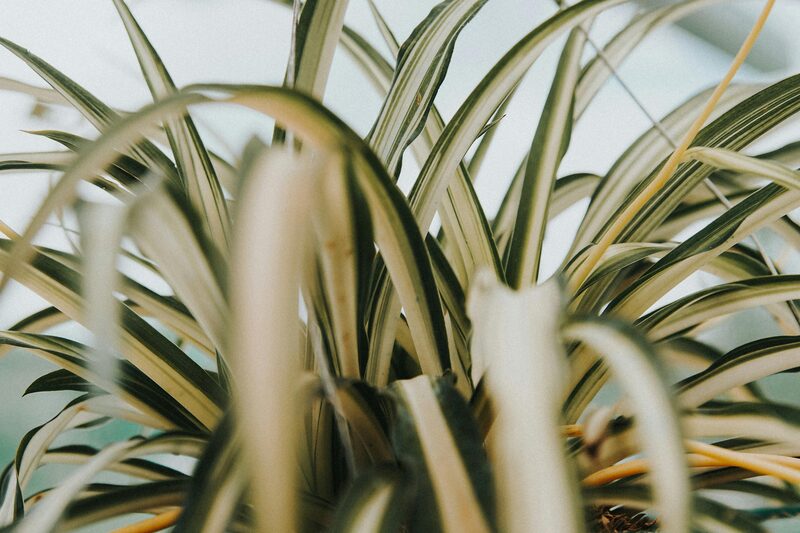
I've had a spider plant collection for four years, and the question I get asked most often at plant events is some version of: "My spider plant used to have white stripes and now it's all green, what happened?" I asked the same question myself in year one, when a beautiful white-striped 'Vittatum' I'd been growing for eight months pushed out four consecutive fully green leaves and the variegated stripes on older leaves seemed to be fading. What I learned in troubleshooting it, and in subsequently growing 'Vittatum', 'Variegatum', 'Bonnie', and the reverse-variegated 'Reverse Variegatum', is that spider plant variegation reversion is specific, predictable, and almost always reversible. Here is everything I know about why it happens and how to stop it.
What Spider Plant Variegation Actually Is and Why It Is Inherently Unstable
Spider plant variegation is chimeric, meaning the white or cream stripes are produced by cells that lack chlorophyll, and these chlorophyll-free cells exist alongside normal green cells in the same leaf tissue. The two cell types are genetically distinct but coexist in a stable pattern in well-grown plants. The fundamental instability arises from biology: cells without chlorophyll cannot photosynthesize and are metabolically less efficient than green cells. Under conditions of stress or resource limitation, the plant's active cellular processes favor the green, photosynthetically active cells, and the proportion of non-green cells in new leaf tissue decreases, producing leaves with less variegation, reduced stripe width, or no white tissue at all.
The three main cultivars differ meaningfully in how stable their variegation is under home conditions. Chlorophytum comosum 'Vittatum' has a white stripe running down the center with green margins, this is the most widely sold form and also the one I've found most prone to reversion in inadequate light. 'Variegatum' has the opposite pattern, green center with white or cream margins, and I've found it slightly more stable, possibly because the green central stripe provides a more reliable photosynthetic base. 'Bonnie' is the curly-leafed variant of 'Vittatum' patterning and reverts similarly. According to University of Minnesota Extension's guide to houseplant variegation, chimeric variegation in Chlorophytum species is light-sensitive and inherently less stable than viral or genetic variegation patterns, making environmental management the primary tool for maintaining color expression.
The Primary Driver: How Light Level Determines Variegation Intensity
Inadequate light is the cause of variegation reversion in the majority of spider plant cases I've seen. The mechanism is straightforward: in low light, the plant needs to maximize every unit of photosynthetic capacity it has. New leaves are produced with a higher proportion of chlorophyll-bearing green cells, because the metabolic cost of maintaining non-photosynthetic white cells is too high to sustain under light-limited conditions. The result is new leaves that are either fully green or show only faint, narrow stripes where broad white bands used to be.
The light threshold where I consistently see reversion begin: more than five to six feet from a window, or in rooms where the dominant light source is overhead artificial lighting without a supplemental grow light. The threshold for stable, vivid variegation maintenance: bright indirect light within two to four feet of an east- or west-facing window, with the plant receiving at least four to six hours of usable ambient light daily. Importantly, this is not about preventing direct sun, spider plants tolerate some direct morning sun and actually benefit from it for the best stripe intensity, it is about preventing the chronically dim conditions that make non-green cells metabolically unsustainable. Our resource on what bright indirect light actually means provides precise window-direction and distance measurements that translate directly to identifying the right position for variegation stability. The comprehensive spider plant care and propagation guide covers the broader care context including watering, humidity, and spiderette management alongside variegation maintenance.
Genetic Reversion: What to Do When All-Green Shoots Appear
There is a second, distinct mechanism of reversion that occurs independently of light level: a shoot or runner may produce a plantlet that is genetically all-green rather than variegated, because the chimeric cell balance in that particular branch of the plant shifted to favor chlorophyll-bearing cells during development. This kind of reversion appears as a spiderette with no stripes at all, even when the mother plant is in bright light and producing well-variegated growth elsewhere.
The important principle: if an all-green shoot or runner is allowed to remain on the plant and is propagated, all subsequent plants from that shoot will also be solid green. If you want to maintain variegated offspring, remove all-green runners from the plant as soon as you identify them, before they develop any further or are separated for propagation. This is not harmful to the mother plant; removing a runner redirects the plant's energy toward the variegated growth. I check my spider plants' runners carefully before allowing any to develop to propagation size, specifically to catch and remove the occasional fully green one before it matures. According to Gardening Know How's Chlorophytum resources, removing all-green reversions as early as possible is the most effective method for preventing the gradual takeover of solid-green growth in mature, multi-stemmed spider plant specimens.
Step-by-Step: How to Restore and Maintain the White Stripe
Restoring variegation requires both correcting the light conditions that caused reversion and managing the plant's existing growth. The process I follow: first, move the plant to its brightest available indirect light position, within two to three feet of an east- or west-facing window, or under a full-spectrum LED grow light on a 14-hour timer positioned 12-14 inches above the foliage. Second, remove any fully green runners or spiderettes (not the mother plant's leaves, those stay unless they are damaged). Third, wait four to six weeks before assessing new growth: new leaves produced after the light correction should begin showing increased white stripe width compared to the fully-green leaves produced during the reversion period.
If new leaves emerge with improved variegation after the light correction, the reversion was entirely light-driven and the fix is complete. If new leaves still come in fully green despite bright light, there may be a deeper genetic reversion in the crown of that particular stem, in which case propagating from the most strongly variegated spiderettes (those showing the widest, most vivid white stripes) and starting fresh is the most reliable path to a well-variegated plant. Variegated spiderettes propagated from the most vivid sections of a parent plant consistently produce better-striped offspring than those taken from minimally variegated sections. According to Missouri Botanical Garden's Chlorophytum cultivation resources, selecting for propagation from the most strongly variegated portions of the plant is the standard horticultural approach for maintaining chimeric variegation across generations in ornamental houseplants.
Common Mistakes
- Placing spider plants in low-light rooms expecting stable variegation: Spider plants tolerate low light for survival but will revert to green in those conditions. Bright indirect light is required to maintain white stripes consistently.
- Propagating from all-green spiderettes: A fully green runner produces fully green offspring. Propagate only from runners showing strong, even variegation, the stripe width of the parent spiderette correlates directly with the variegation quality of the new plant.
- Assuming reversion is permanent: Light-driven reversion is almost always reversible. Move the plant to better light and new growth with restored variegation typically appears within four to six weeks.
- Removing old green leaves expecting immediate visual improvement: Variegated new leaves grow from the crown center. Existing green leaves remain green regardless of improved conditions. The restoration is visible only in new growth over several weeks.
- Overwatering in an attempt to "boost" the plant: Spider plants in soggy soil are under root stress, which compounds any light-related reversion and produces additional yellowing. Standard succulent-light watering, when the top inch is dry, applies here too.
- Using fertilizer to fix variegation: Fertilizing does not affect variegation expression, it is a light and genetics issue, not a nutrition issue. High-nitrogen fertilizer in particular can drive green growth at the expense of variegation expression.
Quick Reference Care Table
| Factor | For Variegation Maintenance | Notes |
|---|---|---|
| Light | Bright indirect; 2-4 ft from east or west window | Minimum for stable white stripe; more light = wider stripe |
| Water | When top inch of soil is dry | Every 7-14 days; tolerates brief drought |
| Soil | Well-draining standard mix with perlite | Never sit in standing water; fluoride sensitivity, use filtered water |
| Humidity | 40-60%; tolerates average household levels | More tolerant of dry air than many houseplants |
| Temperature | 60-80°F (15-27°C) | Tolerates cooler temps better than most tropicals |
| Fertilizer | Half-strength balanced liquid, monthly Apr-Sep | Avoid high nitrogen which favors green cell growth |
| Runner management | Remove all-green spiderettes promptly | Propagate only from most strongly variegated runners |
Frequently Asked Questions
How long does it take for variegation to come back after improving light?
New variegated growth typically begins appearing within four to six weeks of moving the plant to better light. Spider plants grow relatively quickly, one to two new leaves per month in good conditions, so improvement becomes visible within one to two growth cycles. The fully green leaves already on the plant will not change; you are looking for new leaves emerging from the crown center to show progressively wider white stripes compared to the solid-green leaves produced during the reversion period. If no improvement is visible in new growth after eight weeks of bright indirect light, genetic reversion in the crown is the likely cause and propagation from well-variegated runners is the next step.
Why does my spider plant have brown tips as well as lost variegation?
Brown leaf tips in spider plants are almost always caused by fluoride in tap water, the same mechanism that affects peace lilies and dracaenas. The combination of fading variegation and brown tips typically means the plant is dealing with two separate issues simultaneously: low light causing variegation reversion, and fluoride accumulation causing tip burn. Switching to filtered water addresses the tips, and improving light addresses the variegation. The two fixes are compatible and can be implemented at the same time.
Which spider plant cultivar is easiest to maintain good variegation in?
In my experience, 'Variegatum', the form with a green center and wide cream-white margins, maintains its variegation somewhat more consistently in moderate indoor light than 'Vittatum', the form with a white center stripe and green margins. This may be because the broad central green stripe in 'Variegatum' provides a more photosynthetically reliable base, making the white margins slightly less metabolically costly to maintain under variable light conditions. Both cultivars need bright indirect light for best results, but if your home offers only moderate indirect light, 'Variegatum' is the more reliable choice for consistent stripe retention.
Spider plant variegation reversion is one of those problems that looks mysterious but has a straightforward answer in the overwhelming majority of cases, it is almost always about light. Move the plant, give it four to six weeks, and watch the stripes return in the new growth. If you want help with your exact setup, send the plant name, light, pot size, and recent watering notes through the contact page.

About the Author
Written by Sage Avery, a plant care writer at Plant Companion Guide. For how we create and update content, see our editorial policy.