Air Plant Care for Beginners: Everything I Wish I Knew on Day One
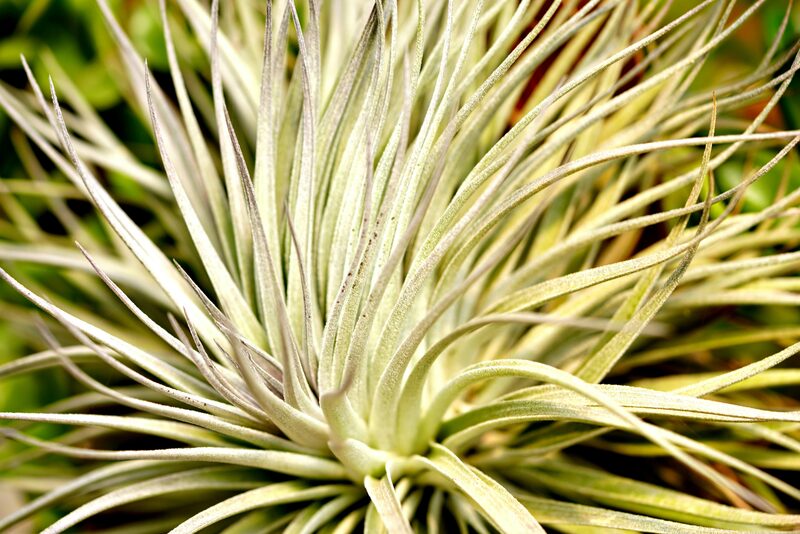
I killed my first six air plants. Three dried to husks within weeks, two rotted at the base despite what seemed like careful watering, and the sixth simply turned brown over the course of a month while sitting in a glass globe with no airflow. The common thread, I later realized, was that I had applied standard houseplant logic to a plant that operates by entirely different rules. Tillandsias are bromeliads. They absorb water and nutrients through specialized leaf scales called trichomes, not through roots, and that single biological fact changes everything about how you care for them. Once I understood that, my survival rate went from zero to near-perfect within a season.
What Tillandsias Actually Are and Why Standard Plant Logic Fails
Air plants belong to the genus Tillandsia, a diverse group of over 650 species native to forests, deserts, and mountains across South America, Central America, Mexico, and the southern United States, ranging from USDA Hardiness Zones 9 through 12 where some species grow outdoors year-round. In their native environments, they attach to trees, rocks, and telephone wires, absorbing moisture and nutrients entirely from rain, fog, and airborne particles through trichomes, tiny, hair-like scales visible as the silvery or fuzzy texture on the leaves.
This means roots are almost entirely structural, they anchor the plant, not feed it. Burying roots in soil or keeping them permanently wet causes rot at the base, which is how most beginners lose their plants. The other critical implication is that air circulation is not optional. Trichomes cannot function properly in stagnant air, and wet leaves in a still environment are a recipe for fungal rot. According to Gardening Know How's Tillandsia care resources, inadequate air circulation after watering is the leading cause of air plant death in home collections.
Soaking vs. Misting: The Only Method That Actually Works
Misting alone is not adequate for most air plants. The fine water droplets from a misting bottle evaporate too quickly for the trichomes to absorb a meaningful amount of moisture. The result is a plant that looks watered but is actually slowly desiccating. I learned this the hard way with my first three plants.
The method that works: submerge the entire plant in room-temperature water for 20-30 minutes, once a week in summer and every ten to fourteen days in winter. After soaking, shake the plant gently to remove water pooled in the base or leaf axils, especially in the densely layered species like T. caput-medusae or T. bulbosa, then set it upside down on a clean towel for one to two hours before returning it to its display. That inversion step is not optional: water sitting at the base overnight is the direct cause of most rot deaths I've witnessed in my collection.
In very dry indoor environments, anything below 40% relative humidity, I supplement with a light misting two to three times between soaks, focusing on the outer leaves rather than the base. In a humid environment (above 50%), soaking every ten to fourteen days is sufficient year-round.
Light and Air Circulation: The Two Variables Most Guides Understate
Most air plants prefer the light equivalent of a bright, shaded outdoor setting, what we'd call bright indirect light indoors. An east-facing window is nearly ideal: morning sun is gentle enough that the leaves won't burn, and the ambient afternoon light is sufficient for healthy photosynthesis. A south-facing window works well if the plant is positioned two to three feet back from the glass. Direct afternoon sun through glass will bleach and scorch the leaves within days.
The more xeric species (silvery-gray, heavily covered in trichomes, like T. xerographica, T. harrisii, or T. streptophylla) tolerate more direct light and need less frequent watering than the more mesic species (greener, smoother leaves, like T. flabellata or T. cyanea). If you're new to air plants, the silvery-trichomed xeric types are more forgiving of both missed waterings and variable light conditions, which is why I recommend them to beginners. For more guidance on matching light levels to plant needs, the guide to how much sunlight indoor plants need provides a useful framework.
Air circulation is non-negotiable. After watering, air plants must dry completely within two to four hours. Never return a wet air plant to a glass globe, sealed terrarium, or tight decorative arrangement. Open wire frames, wood mounts, hanging displays, and shallow decorative bowls with no enclosure are all safe options. According to University of Minnesota Extension's houseplant care resources, adequate post-watering airflow is the most important environmental variable in preventing fungal diseases in epiphytic plants.
Mounting, Displaying, and What to Do in Summer
Air plants can be attached to almost any surface that doesn't hold standing water. I use food-safe silicone adhesive or copper wire (copper is naturally antifungal) to mount mine to driftwood, cork bark, and slate tiles. Hot glue works in a pinch but makes it harder to remove the plant for soaking. Spanish moss makes a good background material and maintains a bit of humidity around the base without trapping water.
In summer, my air plants live outdoors on a shaded porch from late May through early September, and the combination of outdoor humidity, natural rainfall, and ambient air circulation keeps them thriving with minimal intervention from me. In USDA Zone 8b, summer nights rarely drop below 55°F, which is safe for most Tillandsia species. Moving air plants outdoors for summer is one of the highest-impact things a collector can do for plant health, I consistently see my best new pup production during and just after the outdoor season. The collection of best indoor low-light plants includes some good companion options for the shadier corners where air plants also perform well.
For fertilizing, I dissolve a small amount of bromeliad fertilizer (or a balanced fertilizer at one-quarter strength) into my soaking water once a month from March through September. Air plants need very little, over-fertilizing causes leaf tip burn and can accelerate pup production at the expense of the mother plant's longevity. According to Missouri Botanical Garden's bromeliad care notes, monthly low-dose fertilizing during the growing season is sufficient for healthy, blooming Tillandsias in home collections.
Common Mistakes
- Misting instead of soaking: Misting provides far too little water for trichomes to absorb meaningfully. Full submersion soaks are required for most species to stay hydrated.
- Not shaking out water after soaking: Water pooled in leaf bases and axils overnight causes rot at the crown, the most common single cause of air plant death in beginner collections.
- Displaying in closed glass globes or sealed terrariums: Stagnant air traps humidity and prevents the plant from drying after watering, leading to fungal rot within weeks.
- Placing in low light: Air plants genuinely need bright indirect light. Dark corners and dim shelving produce slow decline even when watering is correct.
- Using chlorinated tap water without treating it: Chlorine and fluoride in tap water can damage trichomes over time. Use filtered water, rainwater, or let tap water sit out overnight before soaking.
- Gluing to surfaces that trap water: Hot glue at the base prevents soaking water from draining freely and creates a humid pocket where rot begins. Use wire or silicone instead.
- Never fertilizing: Air plants draw nutrients from their environment. Without occasional fertilizing, long-term health and bloom production suffer noticeably after year one.
Quick Reference Care Table
| Factor | Xeric Types (silvery) | Mesic Types (green) |
|---|---|---|
| Light | Bright indirect to some direct | Bright indirect only |
| Soak Frequency | Every 10-14 days | Every 7-10 days |
| Dry Time After Soak | 1-2 hours inverted | 1-2 hours inverted |
| Air Circulation | Essential; must dry in 2-4 hrs | Essential; must dry in 2-4 hrs |
| Temperature Range | 50-95°F (10-35°C) | 55-90°F (13-32°C) |
| Fertilizer | Bromeliad fert 1/4 strength, monthly in growing season | Same |
Frequently Asked Questions
Why is my air plant turning brown at the tips?
Brown leaf tips almost always indicate underwatering or low humidity. Check whether your soaking schedule matches the species type, mesic green-leafed varieties need soaking every seven to ten days, while xeric silver types can stretch to every two weeks. If the brown is spreading from the base upward rather than from the tips, that is rot caused by water pooling at the crown, shake the plant more vigorously after soaking and ensure it dries fully inverted before returning to its display.
How do I know when my air plant is about to bloom?
Most Tillandsias bloom once in their lifetime, typically signaled by a color change, the center leaves of the rosette flush pink, red, or orange, followed by a flower spike. After blooming, the mother plant gradually dies back but produces pups (offsets) at its base. Leave the pups attached until they are one-third to one-half the size of the mother plant before separating them, which ensures they are large enough to sustain themselves independently.
Can I grow air plants in a terrarium?
Only in an open terrarium with no lid. Air plants need free airflow to dry fully after watering, a closed glass container traps humidity and creates conditions for rapid fungal rot. Open geometric wire terrariums, shallow glass bowls, or wooden display boxes are all suitable. If you want to create a humidity-loving display with a closed container, orchids and ferns are much better candidates than Tillandsias.
Once you understand that air plants are fundamentally different from every other houseplant you've kept, caring for them becomes genuinely straightforward, and the diversity of the genus means there is always a new species to discover. If you want help with your exact setup, send the plant name, light, pot size, and recent watering notes through the contact page.

About the Author
Written by Sage Avery, a plant care writer at Plant Companion Guide. For how we create and update content, see our editorial policy.