Bird's Nest Fern Care: Light and Watering for Glossy, Crack-Free Fronds
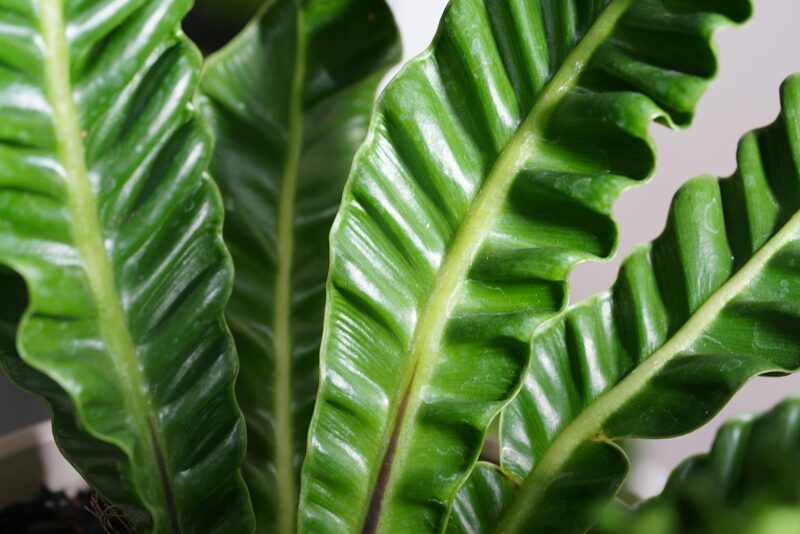
My first bird's nest fern arrived with fronds so glossy they looked almost lacquered, the kind of deep, unblemished green that makes this plant one of the most elegant options for a humid bathroom or a shaded corner. Within three months, the older fronds had developed brown tips and longitudinal cracks along their midribs, and I'd lost two new fronds entirely to what I later identified as rot caused by pouring water directly into the central rosette. The plant that replaced it, now eighteen months old and pushing out one perfect frond per month, has never cracked, browned, or rotted. The difference was understanding two specific things: where water goes and what humidity actually needs to be. Everything else about bird's nest fern care is genuinely simple.
The Central Rosette: Why Where You Water Matters More Than How Much
Asplenium nidus grows as an epiphyte in its native tropical habitat across Southeast Asia, Australia, and East Africa, where it nestles in the forks of trees and the debris and moisture that collect naturally in its cup-shaped center help sustain it between rainfall events. In a home environment, this biology creates a specific watering vulnerability: standing water pooled in the central rosette, the tight cluster of unfurling fronds at the plant's center, cannot drain freely and creates conditions for fungal crown rot that progresses quickly and is often fatal to new growth.
The correct watering technique: pour water around the perimeter of the pot or at the soil surface, directing water toward the root zone rather than the center. I use a narrow-spouted watering can and circle the inside edge of the pot, consciously avoiding the rosette. When I water from above in the kitchen sink, I tilt the pot so water flows away from the center. This simple positional habit has eliminated crown rot in my collection entirely. According to Gardening Know How's Asplenium care resources, crown rot from water pooling in the central cup is the most commonly cited cause of bird's nest fern decline in beginner collections, and adjusting watering angle resolves it completely without any other changes.
For frequency: I water when the top inch of soil is moist but not saturated, bird's nest fern likes consistently moist soil more than the fluctuating dry-to-wet cycle that suits succulents or even many other tropical houseplants. In a 6-inch pot in moderate indirect light with high ambient humidity, that means watering roughly every five to seven days in summer and every eight to twelve days in winter. The soil should never become bone dry, but it should not stay waterlogged either. I use filtered water, fluoride in tap water accumulates in the frond tissue and causes brown tip burn that is otherwise difficult to explain or resolve.
Light and Humidity: The Two Variables That Make or Break Frond Quality
Bird's nest fern is one of the most light-adaptable ferns for indoor growing, it handles a range from medium indirect to fairly low light without the dramatic decline that more demanding ferns show in dim conditions. That said, there is an important upper limit: direct sun, even for brief periods, bleaches and scorches the glossy fronds permanently. My plant lives about three feet back from a north-facing window in a room that receives reflected outdoor light but no direct sun at any point in the day. The fronds maintain their gloss and deep green color perfectly in this position.
East-facing windows at four to six feet are also excellent, the gentle morning sun doesn't reach the plant directly, but the overall light level is higher than a north-facing room, which speeds frond production slightly. What I specifically avoid is placing it near a south-facing window even with a curtain, on clear days the light intensity peaks in a way that causes the pale midrib of each frond to bleach while the rest of the frond remains green, creating an uneven appearance that doesn't reverse. For a full framework on matching different light levels to appropriate plants, the guide to how much sunlight indoor plants need covers all the practical measurements and window-direction principles in detail.
Humidity is where most bird's nest fern care fails in practice. This plant needs ambient humidity above 50%, and performs best at 60-70%. Below 40%, common in centrally heated homes in winter, fronds begin developing longitudinal cracks along the midrib as the leaf tissue desiccates unevenly under the stress of low humidity. These cracks are permanent damage; the frond does not heal. Preventing them requires a humidifier maintaining 55-65% in the room, not just occasional misting (which creates brief spikes that don't address baseline dryness). Bathrooms with natural light and a working shower are genuinely ideal micro-environments for this plant and the reason it photographs so beautifully in interior design content. According to the Royal Horticultural Society's fern care resources, consistent ambient humidity is the primary determinant of frond integrity in indoor-grown Asplenium species, more influential than light level or watering frequency.
Understanding Frond Cracking, Browning, and Dull Appearance
The three most common symptom patterns in bird's nest fern, with their actual causes: longitudinal midrib cracks indicate low humidity (the frond dries unevenly, causing tension cracks); brown or tan leaf tips indicate fluoride accumulation from tap water or, secondarily, very low humidity; dull, matte fronds instead of glossy indicate dust accumulation blocking surface light reflection, resolved by wiping fronds gently with a damp cloth every three to four weeks.
New fronds unfurl from the center of the rosette and are extraordinarily delicate while emerging. The unfurling frondlet looks like a tight, bright green coil and takes two to three weeks to fully open. During this time, do not touch, brush, or direct water at the unfurling growth, any physical contact or water strike at this stage causes permanent deformation, kinking, or browning that the fully opened frond carries for its entire lifespan on the plant. I physically remind myself not to touch the center of the rosette whenever I water. The most satisfying fronds in my collection are the ones I resisted touching during their emergence. For context on how similar patience principles apply to another commonly cracked and browned plant, the peace lily care guide addresses the causes and prevention of frond and leaf damage in a similarly humidity-sensitive tropical.
Fertilizing, Repotting, and Long-Term Care
Bird's nest fern is a slow feeder and does not require aggressive fertilizing. I apply a balanced liquid fertilizer at one-quarter strength (half the dilution I use for faster-growing tropicals) once a month from March through September. Over-fertilizing causes brown tip burn that is genuinely difficult to distinguish from fluoride damage, I keep the dose conservative specifically to avoid this ambiguity. I stop fertilizing entirely from October through February.
Repotting is needed only every two to three years, when roots are visible at the drainage holes or the plant is lifting itself out of its pot. Bird's nest ferns have relatively modest root systems for their frond size and are content in smaller pots than their canopy might suggest. I use a peat-free mix of two parts houseplant potting mix to one part perlite, which retains moisture without becoming waterlogged. According to Missouri Botanical Garden's fern care resources, bird's nest ferns are non-toxic to cats, dogs, and humans, one of the genuinely pet-safe fern options for households with animals, making them a particularly practical choice for plant parents navigating pet safety.
Common Mistakes
- Pouring water into the central rosette: Water sitting in the cup-shaped center cannot drain and causes crown rot that damages or kills new growth. Always water at the soil perimeter only.
- Touching unfurling fronds: New growth emerging from the center is fragile for two to three weeks. Any physical contact during unfurling causes permanent kinking or browning.
- Allowing humidity to drop below 40% in winter: This is the most common cause of longitudinal frond cracking, which is permanent damage. A humidifier is the only reliable prevention.
- Using tap water long-term: Fluoride accumulation in frond tips causes browning that mimics underwatering. Filtered or rainwater prevents this damage from accumulating.
- Placing in direct sun: Any direct sun exposure, even briefly through an east window in summer, bleaches fronds and causes pale streaking that does not reverse.
- Letting the soil dry completely: Unlike succulents or even most tropicals, bird's nest fern prefers consistently moist (not wet) soil. Complete drying causes tip browning and slows new frond production significantly.
Quick Reference Care Table
| Factor | Ideal Condition | Notes |
|---|---|---|
| Light | Medium indirect; north or east window preferred | No direct sun; bleaches and scorches permanently |
| Water | When top inch of soil is moist but not saturated | Every 5-12 days; filtered water; never into the rosette |
| Soil | Consistently moist; 2 parts potting mix, 1 part perlite | Never let dry out completely |
| Humidity | 55-70% | Humidifier required; bathrooms ideal; no misting alone |
| Temperature | 65-80°F (18-27°C) | No cold drafts; keep away from air conditioning vents |
| Fertilizer | 1/4 strength balanced liquid, monthly | March through September; conservative dosing only |
| Toxicity | Non-toxic to cats, dogs, and humans | One of the safest fern choices for pet households |
Frequently Asked Questions
Why does my bird's nest fern have cracks running along the fronds?
Longitudinal cracks along the frond midrib are caused by low ambient humidity, the leaf surface and interior tissue desiccate at different rates under dry conditions, creating tension that splits the frond. This damage is permanent; affected fronds will not heal. Prevent new cracking by raising humidity above 55% with a dedicated humidifier and keeping the plant away from heating vents and cold windows. Allow cracked older fronds to age out naturally as the plant pushes new, crack-free growth in better conditions.
How often does a bird's nest fern produce new fronds?
In good conditions, bright indirect light, 60% humidity, consistently moist soil, a healthy bird's nest fern produces one to two new fronds per month during the growing season from spring through autumn. In winter, frond production slows to roughly one per month or less, which is normal. If frond production has stopped entirely in summer, investigate light level and humidity first, both dropping below the plant's threshold will pause new growth before causing any visible damage to existing fronds.
Can I grow bird's nest fern in a bathroom with no window?
No, a truly windowless bathroom provides insufficient light for sustained health. Bird's nest fern needs at least medium indirect light, equivalent to the ambient light level in a room with a north-facing window. A bathroom with a skylight or a frosted glass window that transmits diffuse natural light throughout the day is suitable. If the bathroom has no natural light source at all, a full-spectrum LED grow light on a 12-hour timer positioned 12-18 inches above the plant is a reliable substitute, though it adds complexity that somewhat offsets the low-maintenance reputation of this otherwise easy plant.
Eighteen months and counting with my current bird's nest fern, still no cracks, still glossy, still pushing perfect fronds from the center. Once you train yourself to water around the rosette and keep humidity honest, this plant is as close to self-managing as a fern gets. If you want help with your exact setup, send the plant name, light, pot size, and recent watering notes through the contact page.

About the Author
Written by Sage Avery, a plant care writer at Plant Companion Guide. For how we create and update content, see our editorial policy.