Money Tree Care: A Complete Indoor Growing Guide
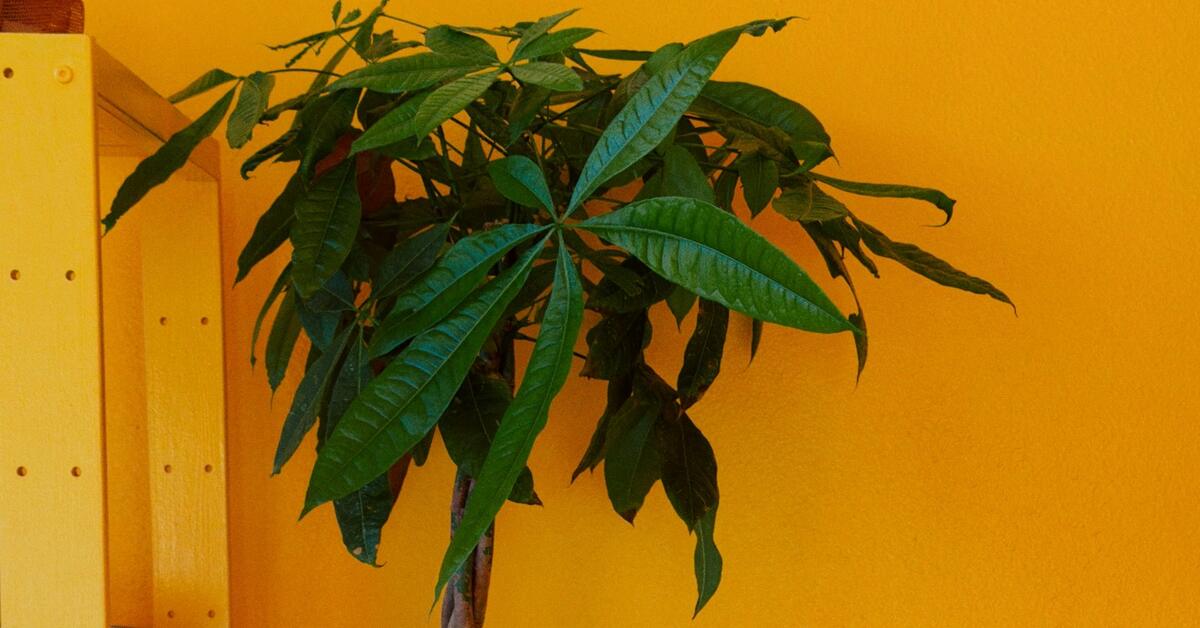
Money tree care is simple when you give the plant bright, indirect light, a free-draining mix, and water only after the upper soil begins to dry. Keep the roots out of standing water, protect the foliage from harsh sun and cold drafts, and feed only while the plant is actively growing.
The common indoor money tree is Pachira aquatica, a tropical tree in the mallow family. It is not the coin-leaved Chinese money plant, Pilea peperomioides. Most shop-bought Pachiras are several young stems braided together, but the braid is decorative. Each stem still needs healthy roots, open foliage, and room to expand.
Key Takeaways
- Use bright, filtered light or partial shade, and introduce stronger light gradually.
- Check the potting mix before watering, then soak it fully and let it drain.
- Choose an open mix and a pot with drainage rather than a large decorative container.
- Troubleshoot with soil moisture, light, temperature, and pest evidence together.
Money Tree Care at a Glance
A healthy money tree needs a stable routine, not constant attention. The Royal Horticultural Society profile for Pachira aquatica recommends bright light or partial shade, an open free-draining compost, and indoor temperatures above 59°F (15°C). Use the table as a starting point, then adjust from what the plant and pot show you.
| Care factor | Useful starting point | What to watch |
|---|---|---|
| Light | Bright indirect light or partial shade | Leggy growth in deep shade; pale scorched patches after harsh sun |
| Water | Water after the upper mix starts to dry | A lighter pot and drier mix, not a calendar date |
| Soil | Open, moisture-retentive, free-draining potting mix | Water should pass through without the root ball staying saturated |
| Temperature | Warm room, above 59°F (15°C) | Cold glass, drafts, radiators, and air-conditioning vents |
| Feeding | General houseplant fertilizer during active growth | Follow the product label and pause when growth slows |
| Pruning | Trim long shoots in spring as needed | Cut above a healthy node with clean pruners |
A useful monthly check takes less than five minutes: look at the newest leaf, feel the mix below the surface, lift the pot, inspect the stem bases, and scan the leaf undersides. Recording what changed is more useful than reacting to one old yellow leaf.
What Light Does a Money Tree Need?
Money trees grow well in bright light or partial shade, but direct sun can scorch leaves when a plant has not been acclimated. NC State Extension recommends indirect sunlight or a mix of sun and shade for container-grown Pachira aquatica. An east-facing window or a bright position set back from stronger glass is often a sensible starting point.
Read the new growth
Light problems become clearer over several leaves. Long gaps between leaves, a canopy leaning hard toward the window, or progressively smaller new leaves suggest the plant needs more usable light. Bleached tan patches on the window-facing side suggest too much direct sun. Old damage will not turn green again, so judge the move by the next leaves.
Make changes gradually
Move the plant closer to better light in stages instead of shifting it from deep shade into hot afternoon sun. Rotate the pot a quarter turn when the canopy begins leaning, but avoid moving it to a completely different room every few days. If natural light stays weak, use a grow light according to the fixture maker's coverage and distance guidance.
When and How Should You Water a Money Tree?
Water when the upper layer of potting mix has begun to dry, then wet the entire root ball and allow all excess to escape. Missouri Botanical Garden says indoor money trees perform best in bright light with moderate, even moisture, while NC State warns that standing water can cause root rot. Those points support a responsive routine: neither permanently wet nor neglected until the whole pot is bone-dry.
- Check below the surface. Push a finger or clean wooden skewer into the mix. If it feels cool and wet, wait and check again later.
- Lift the pot. A drier container feels noticeably lighter. This provides a second clue when the surface is misleading.
- Water evenly. Pour slowly around the root ball until water exits the drainage holes.
- Empty standing water. Remove runoff from the saucer or cachepot so the roots are not left soaking.
The interval changes with light, temperature, pot size, soil, and season. A warm bright room dries faster than a cool dim one. If you are unsure whether wilt means thirst or damaged roots, compare the full pattern in our overwatering vs underwatering guide before adding more water.
What Soil and Pot Work Best for Money Tree Care?
A money tree needs a potting mix that holds some moisture while still draining freely and admitting air. RHS recommends an open, free-draining compost, and NC State lists peat moss, perlite, loam, or sand among suitable container ingredients. A quality indoor mix loosened with a coarse amendment can work, but the finished blend matters more than a rigid recipe.
Use a clean pot with open drainage holes. A decorative container without holes should act as a cachepot around a drained nursery pot. Remove the inner pot for watering, let it drain, and empty the outer container before replacing it. Our houseplant soil guide explains how to balance drainage, air, and moisture retention without copying one mix for every room.
Repot only when the roots or mix justify it
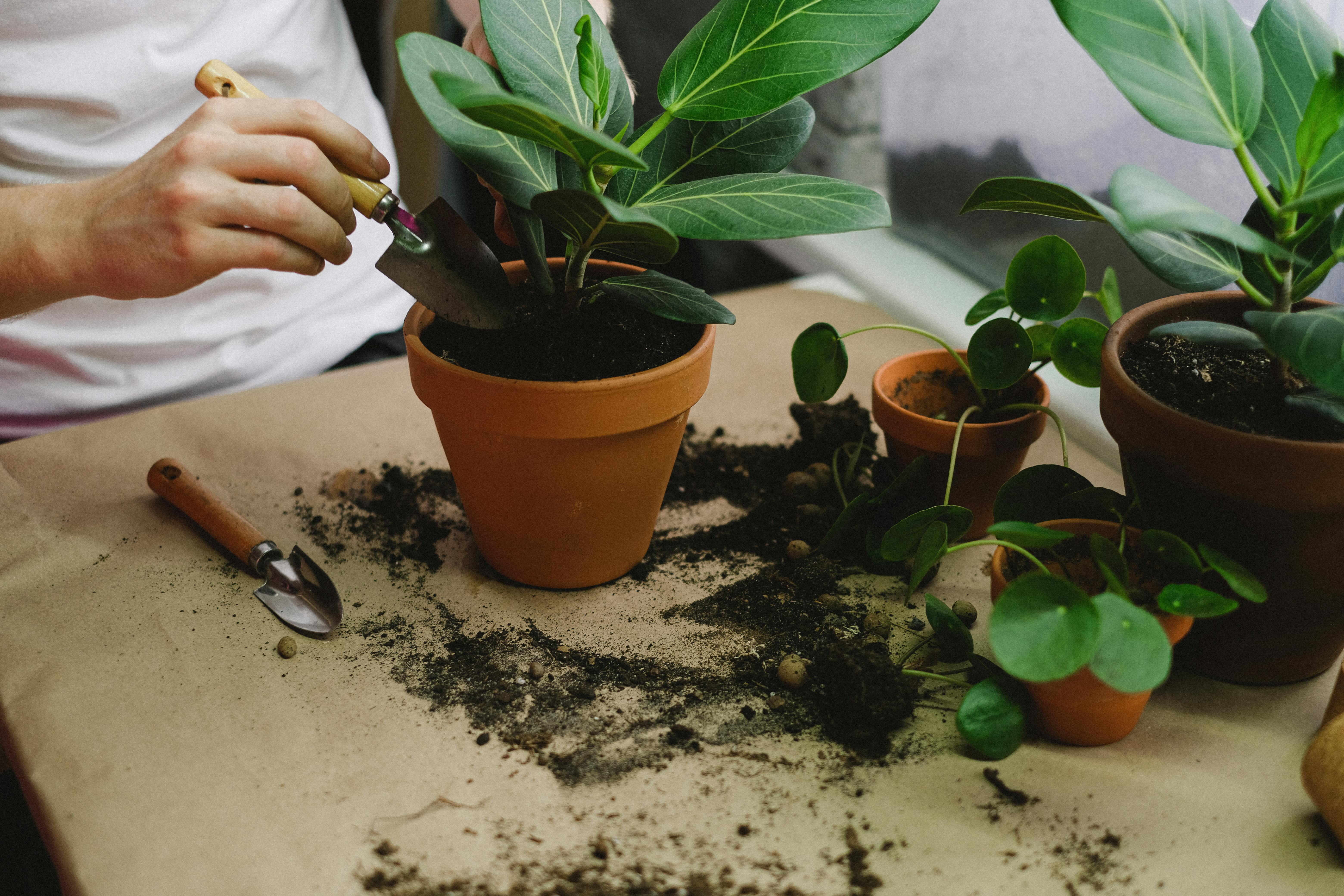
Repot when roots densely circle the container, drainage has become difficult, the mix has collapsed, or the plant dries unusually fast despite thorough watering. Move up only one practical pot size. A much larger volume of unused mix stays wet longer and makes watering harder to judge. If the plant is new, use the repotting after buying checklist to decide whether it needs immediate work or time to settle.
How Do Temperature, Humidity, and Fertilizer Fit the Routine?
Keep a money tree warm and away from abrupt temperature swings. RHS classifies it for indoor conditions above 59°F (15°C), while NC State describes a preference for a humid environment. Ordinary home humidity may be adequate, but heating vents, air conditioners, and cold windows can dry or chill one side of the canopy.
Misting is optional and raises humidity only briefly. If brown edges repeatedly appear during a dry season and the roots are healthy, move the plant away from forced air or use a room humidifier. Do not compensate for dry air by keeping the potting mix constantly wet.
Feed during active growth with a general houseplant fertilizer, following the label for dose and frequency. Reduce or pause feeding when growth slows in lower seasonal light. Fertilizer cannot correct poor light or root damage, and repeated excess can leave salts in the mix. If water runs slowly or a crust develops, check the root zone before adding another dose.
How Should You Prune and Manage a Braided Trunk?
Prune long or awkward shoots in spring with clean, sharp pruners, cutting just above a healthy node. RHS advises cutting back shoots as needed to control size. Remove dead material at its base, but avoid taking off a large share of healthy foliage at once because the leaves power recovery.
The braid does not need routine tightening. Check for wire, tape, or ties left from production and remove anything biting into expanding bark. Inspect each stem at soil level. A firm base is reassuring; a soft, dark, or collapsing base needs prompt investigation. When several stems share one pot, one failing stem can be hidden behind healthy foliage.
What Money Tree Care Problems Match These Symptoms?
Diagnose money tree problems from combinations of evidence. NC State notes that standing water can lead to root rot, dry soil can cause leaf drop, and low humidity or inadequate nutrients can contribute to yellow leaves. It also lists aphids, mealybugs, scale, and fungus gnats as possible pests. Start with soil moisture and stem condition, then check light, temperature, and insects.
| What you see | Check first | Best next step |
|---|---|---|
| Yellow leaves with wet mix | Drainage, pot weight, soft stem bases, sour smell | Stop watering, empty standing water, and inspect roots if the mix stays saturated |
| Leaf drop with very dry mix | Root ball moisture and whether water bypasses the mix | Rehydrate evenly and adjust the next check before the whole pot dries hard |
| Brown crisp edges | Dry air, hot or cold drafts, inconsistent moisture | Stabilize the position and watering before changing fertilizer |
| Long weak growth | Distance from usable light and seasonal change | Increase indirect light gradually and assess the next leaves |
| Sticky leaves or raised bumps | Leaf undersides, stems, scale, mealybugs, or aphids | Isolate the plant, identify the pest, and begin a pest-specific treatment |
Do not diagnose from one leaf
An older lower leaf may yellow as the plant reallocates resources. A repeating pattern across several leaves matters more. Check whether the newest growth is healthy, whether the potting mix is wet or dry below the surface, and whether the symptom is concentrated on the window or vent side.
Dust can hide pests and reduce the value of an inspection. Wipe broad leaflets with a damp cloth while supporting them from below. Avoid leaf-shine products that leave residue. The safe leaf-cleaning guide shows how to clean without damaging the surface.
Is a Money Tree Safe Around Pets?
The ASPCA lists Pachira aquatica as non-toxic to cats and dogs. Non-toxic does not mean edible. The ASPCA page still notes possible nausea, vomiting, and loose stool, so discourage chewing and call a veterinarian if a pet becomes unwell.
NC State also advises caution around the seeds because sources conflict about their safety. Indoor braided money trees rarely flower or fruit, but do not treat any seeds or nuts as a snack.
Frequently Asked Questions
How often should I water a money tree?
Water a money tree when the upper layer of potting mix has started to dry and the pot feels lighter. Water thoroughly, let the excess drain, and empty the saucer. The interval changes with light, temperature, pot size, and season, so do not rely on a fixed weekly schedule.
Can a money tree grow in low light?
A money tree can tolerate partial shade, but it usually grows more evenly in bright, indirect light. In a dim room, move it closer to a usable window or add a grow light. Avoid sudden exposure to strong direct sun, which can scorch foliage.
Should I mist a money tree?
Misting is optional and raises humidity only briefly. Stable room conditions, sensible watering, and distance from heating or cooling vents matter more. If dry air repeatedly causes brown edges, a room humidifier provides steadier control than occasional misting.
Is a money tree toxic to cats and dogs?
The ASPCA lists Pachira aquatica as non-toxic to cats and dogs. Chewing plant material can still cause nausea, vomiting, or loose stool, so keep the plant out of reach and contact a veterinarian if a pet becomes unwell.
Keep the Routine Consistent
Good money tree care comes down to repeatable checks: useful indirect light, a partly dried upper mix before watering, fast drainage, warm stable conditions, and modest feeding during active growth. Start with the root zone when symptoms appear, change one factor at a time, and judge progress by the next leaves rather than damage that is already permanent.

About the Author
Written by Sage Avery, a plant care writer at Plant Companion Guide. For how we create and update content, see our editorial policy.