White Bird of Paradise vs Orange Strelitzia Reginae: Which Works Indoors?
Before I bought my first bird of paradise, I spent two months reading care guides and looking at photographs, and I still managed to bring home the wrong species for what I actually wanted. I purchased a large Strelitzia nicolai (white bird of paradise) because it was the most dramatic plant in the shop, paid significantly more than I'd planned, and then spent the next year realizing that the chances of it ever blooming in my home were essentially zero. What I should have bought was a Strelitzia reginae (orange bird of paradise), smaller, less visually imposing, but the one with a realistic path to flowers indoors. If you are about to make this choice, this guide will help you make the right one for your actual goals.
Size and Growth: The Most Important Difference for Indoor Growing
Strelitzia nicolai is a large plant by any measure. In its native habitat of KwaZulu-Natal, South Africa, it reaches 20-30 feet. In a container indoors, growth is constrained by pot size and light, but a healthy specimen in a large pot with adequate light will reach 6-8 feet tall over three to five years and push leaves with two-foot paddles from stems that eventually become woody and trunk-like. This is genuinely impressive as a design statement, the large paddle-shaped leaves create a tropical canopy that nothing else replicates at scale indoors. It is also genuinely large, genuinely heavy, and genuinely demanding in terms of floor space, pot size, and structural support as it matures.
Strelitzia reginae is a more manageable plant. It matures to three to five feet indoors in a container, with smaller gray-green paddle leaves and a clumping growth habit. It does not produce the dramatic architectural canopy of S. nicolai, but it fits comfortably in a standard room without requiring furniture rearrangement or ceiling clearance planning. The trade-off in visual impact is real, but the trade-off in livability is also real. According to Gardening Know How's Strelitzia care resources, S. nicolai is more commonly sold as an indoor plant specifically because of its dramatic large-leaf appearance, even though S. reginae is substantially better suited to the light conditions and spatial constraints of most homes.
Blooming Indoors: Why S. reginae Almost Always Wins This Category
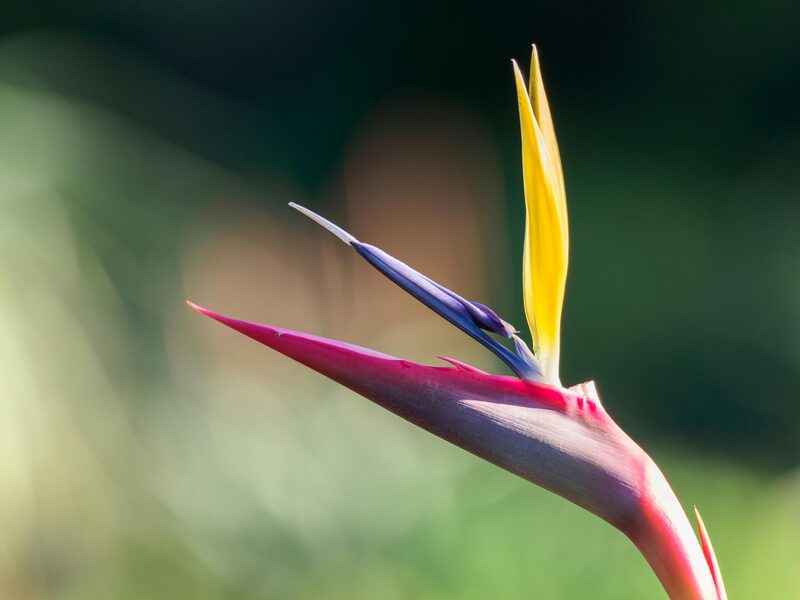
This is the most consequential difference for buyers who want their bird of paradise to actually flower. Strelitzia reginae, the orange-and-blue flower that appears in florist arrangements and is the official flower of the city of Los Angeles, can bloom indoors. It requires several years to maturity (typically five to seven years from seed, two to three from a rhizome division), a large container, and at least four to six hours of direct or very bright light daily. This is achievable in a south-facing window in many homes. I know growers in USDA Hardiness Zones 5 through 8 who have produced flowers from S. reginae in containers moved to their sunniest south-facing windowsill in winter.
Strelitzia nicolai produces white flowers with dark blue-purple bracts, genuinely stunning in person and quite different from the orange of reginae. The challenge is that S. nicolai almost never blooms indoors under typical home conditions. It requires direct, intense outdoor sun for sustained periods and typically blooms only when grown in the ground or in very large outdoor containers in warm climates (USDA Zones 10-12). Growers who purchase S. nicolai as an indoor plant should understand clearly that they are buying it as a foliage plant, the flowers are an unlikely bonus rather than a realistic expectation. Our in-depth guide to growing bird of paradise indoors for bigger leaves covers the light and growth management strategies that apply primarily to S. nicolai as a foliage specimen. For context on managing other large-leaf tropical foliage plants with similar light requirements, the Monstera deliciosa care guide covers complementary principles for bright-light large-leaf growing indoors.
Light, Watering, and Where the Two Species Are Similar
Both species need substantially more light than most indoor tropical houseplants. The minimum for either is bright indirect light for most of the day, meaning within two to three feet of a large south- or west-facing window. Both benefit from several hours of direct sun daily; a south-facing window with no curtain is ideal for both. This is where bird of paradise care diverges most from popular tropical houseplants: putting either species more than four feet from a window produces slow, leggy, unhappy growth and no blooms whatsoever for S. reginae.
Watering requirements are similar between the two: water thoroughly when the top two to three inches of soil are dry, allow complete drainage, and never leave either species sitting in water. S. nicolai has somewhat higher water needs due to its greater leaf surface area, in summer in an 18-inch container, I water roughly every seven to ten days. S. reginae in a 12-inch pot needs water every ten to fourteen days in summer. Both are significantly less frequent in winter as growth slows, extending to every eighteen to twenty-five days in cool, low-light conditions. Both appreciate a well-draining potting mix, two parts quality potting soil to one part perlite, and both need pots with adequate drainage holes. Root rot progresses quickly in either species if soil stays saturated.
According to The Spruce's houseplant care resources, Strelitzia species are consistently rated among the highest-light-requiring commonly sold indoor plants, and placing either species in a room without access to a large south- or west-facing window is one of the most reliable ways to produce a disappointing and non-blooming plant. Missouri Botanical Garden's tropical foliage resources note that both species perform best when root-bound in their containers, sizing up to a dramatically larger pot suppresses blooming in S. reginae and produces excess vegetative growth in both species at the expense of structural development.
Which One Should You Buy? A Practical Decision Framework
Buy Strelitzia nicolai if: you want a dramatic, architectural foliage plant that will fill vertical space in a bright room, you have a south- or west-facing window with good clearance, you are not primarily motivated by flowers, and you are prepared for a plant that will eventually need a large pot, a strong floor, and ceiling clearance. The foliage impact is unmatched among commonly available indoor tropicals.
Buy Strelitzia reginae if: flowering is part of why you want a bird of paradise, your space is average-sized, or you prefer a plant that matures to a manageable scale. The orange-and-blue flowers are genuinely extraordinary, and a blooming S. reginae in a home setting is one of the most impressive things I have seen a container plant produce. The trade-off is that it takes patience, several years from purchase before first bloom in most cases, and consistent bright light throughout that wait.
Common Mistakes
- Buying S. nicolai expecting it to bloom indoors: The white bird of paradise almost never blooms in typical home conditions. If flowering is a priority, S. reginae is the correct choice.
- Placing either species more than 4 feet from a window: Both require very bright light, significantly more than most tropical houseplants. Low-light placement produces slow decline and zero chance of blooming.
- Repotting into a much larger container proactively: Both species bloom more readily when root-bound. Sizing up dramatically suppresses blooming in S. reginae and produces excess vegetative growth in both.
- Tearing split leaves as a problem: The large paddle leaves of S. nicolai naturally split along their margins in air movement, this is a feature, not damage. The splits allow wind to pass through without tearing the whole leaf in the plant's native environment.
- Underestimating the mature size of S. nicolai: A small plant at purchase can reach 6 feet within three years in a large container with adequate light. Measure your ceiling, choose your permanent spot early, and don't underestimate the pot weight at full size.
- Watering on a fixed schedule: Both species have different water needs in summer and winter, and pot size changes drying time significantly. Check soil depth before watering rather than following a calendar.
Species Comparison Table
| Factor | White Bird of Paradise (S. nicolai) | Orange Bird of Paradise (S. reginae) |
|---|---|---|
| Indoor mature height | 6-8 feet | 3-5 feet |
| Flower color | White with dark blue-purple bract | Orange and blue |
| Blooms indoors? | Almost never under typical conditions | Yes, with adequate bright light and patience |
| Best for | Dramatic foliage statement | Foliage and realistic blooming |
| Light requirement | Very bright; 4-6 hrs direct or intense indirect | Very bright; 4-6 hrs direct or intense indirect |
| Pot size at maturity | 18-24 inch container | 12-16 inch container |
Quick Reference Care Table
| Factor | S. nicolai | S. reginae |
|---|---|---|
| Light | Very bright indirect; some direct sun beneficial | Very bright indirect; direct sun needed for blooming |
| Water (Summer) | Every 7-10 days in large container | Every 10-14 days in medium container |
| Water (Winter) | Every 18-25 days | Every 18-25 days |
| Soil | 2 parts potting mix, 1 part perlite | 2 parts potting mix, 1 part perlite |
| Humidity | 40-60%; tolerates average household | 40-60%; tolerates average household |
| Temperature | 65-85°F; USDA Zones 10-12 outdoors | 60-85°F; USDA Zones 9-11 outdoors |
Frequently Asked Questions
How many years does it take for a bird of paradise to bloom indoors?
For Strelitzia reginae purchased as a young nursery plant, five to seven years is a realistic timeline to first bloom from a seedling-grown specimen, and two to three years from a rhizome division of a mature flowering plant. Consistent very bright light, ideally including some direct sun daily, and a slightly root-bound container are the two variables that most accelerate first bloom. Strelitzia nicolai rarely blooms indoors regardless of plant age or care quality, so no reliable timeline exists for home growing.
Why are my bird of paradise leaves splitting?
Longitudinal splits along the leaf margins of Strelitzia nicolai are natural and expected, the large paddle leaves are adapted to split along pre-formed weak lines when buffeted by wind, preventing the whole leaf from tearing or the stem from breaking. This is not damage. If splits are appearing on S. reginae leaves as cracks through the blade rather than along the natural margin, that can indicate physical damage from contact or low humidity in combination with dry air, and is worth addressing by raising humidity slightly and repositioning the plant away from fans or air conditioning.
Can I keep either bird of paradise outdoors in summer?
Yes, and both benefit substantially from it. Move them outdoors after nighttime temperatures are consistently above 55°F, typically late May through early September in most of the United States. Place them in bright shade for the first two weeks to acclimate before moving to a sunnier position. Both species experience their fastest growth rates and best leaf production during outdoor summers, and S. reginae plants that spend summers in full sun outdoors are significantly more likely to bloom in subsequent years than those kept exclusively indoors. Bring both inside before nighttime temperatures drop below 55°F in autumn.
Making the right choice between these two species comes down to a single honest question: do you want flowers, or do you want a foliage statement? Answer that clearly before you buy, and you will not repeat my mistake of paying for the dramatic one and spending a year waiting for flowers that were never going to come. If you want help with your exact setup, send the plant name, light, pot size, and recent watering notes through the contact page.

About the Author
Written by Sage Avery, a plant care writer at Plant Companion Guide. For how we create and update content, see our editorial policy.