Best Pot for Snake Plant: Size, Material & Drainage
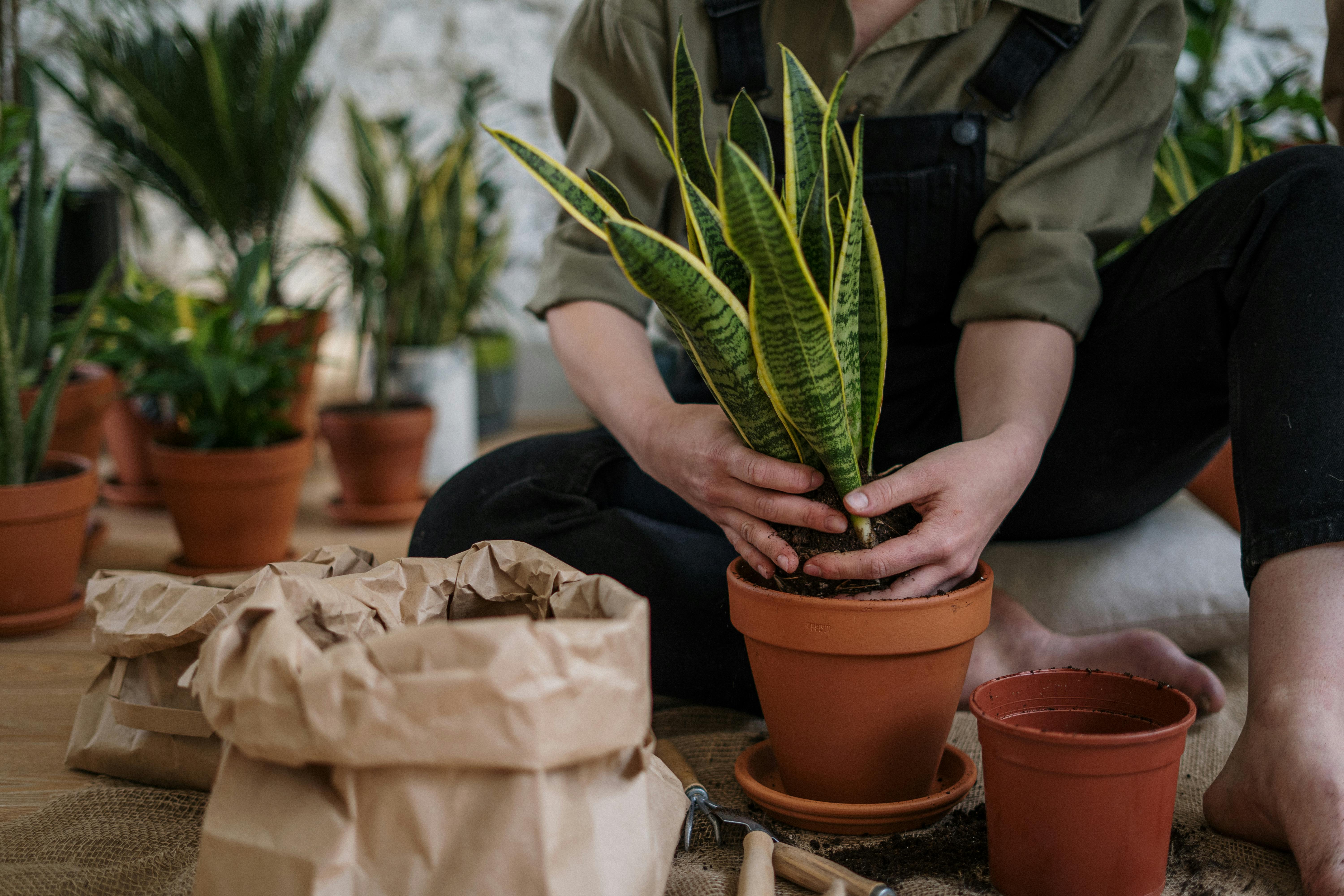
The best pot for snake plant health has drainage holes, fits the root ball closely, and stays stable under upright leaves. Move up only one pot size, usually 1-2 inches wider than the roots. Choose unglazed terracotta for faster drying, or use a drained plastic nursery pot inside a heavy cachepot when you want easier handling and less risk of cracked clay.
That answer is more useful than declaring one material perfect. Pot size controls how much wet mix surrounds the roots. Drainage controls where extra water goes. Material changes how quickly the mix dries. Get those three decisions right and the container supports the plant instead of quietly working against it.
Key Takeaways
- Pick a pot one size larger than the root ball, not one that matches the leaf height.
- Use at least one open drainage hole and empty the saucer or cachepot after watering.
- Choose terracotta for faster drying and plastic for lighter weight and crack resistance.
- Repot only when roots, pot shape, or drying speed show the plant has outgrown its space.
What Is the Best Pot for a Snake Plant?
The best pot for snake plant roots is a snug, stable container with working drainage. Snake plant, Dracaena trifasciata, stores water in fleshy leaves and grows from firm underground rhizomes. Penn State Extension recommends a heavy pot for taller forms, notes that the plant tolerates a snug fit, and warns that overwatering commonly causes root rot.
For many homes, unglazed terracotta is the easiest default. Porous clay lets moisture escape through the pot wall, so the mix dries faster than it does in plastic. Terracotta also adds useful weight beneath tall leaves. The tradeoff is brittleness: a crowded rhizome can crack clay, and a large wet pot can be awkward to lift.
A plastic nursery pot inside a weighted decorative cachepot solves a different problem. The inner pot is light, easy to inspect, and less likely to shatter as rhizomes expand. The outer pot provides stability and appearance. Whichever setup you choose, the inner root zone still needs a clear path for water to leave.
How Big Should a Snake Plant Pot Be?
Choose a snake plant pot one size larger than the current root ball, usually 1-2 inches wider in diameter. University of Minnesota Extension advises moving houseplants up just one pot size because excess mix can hold too much water. The Royal Horticultural Society gives snake plants the same close-fit guidance.
Measure the roots, not the leaves
Slide the plant out and measure the widest part of the root ball. Add 1 inch for a small plant or up to 2 inches for a larger clump. A 5-inch root ball fits a 6-inch pot better than an 8-inch pot. Leaf height does not determine the soil volume the roots can use.
Do not repot only because the leaves look large. If roots are not circling densely, pushing through drainage holes, or deforming the container, the existing pot may still be right. You can place that nursery pot in a heavier outer container if the only problem is tipping.
| Root ball width | Practical next pot | Decision check |
|---|---|---|
| About 3-4 inches | 4-5 inch pot | Keep the increase close to 1 inch |
| About 5-6 inches | 6-8 inch pot | Choose the smaller fit if roots are loose |
| About 7-8 inches | 8-10 inch pot | Prioritize weight and a wide base |
| Large divided clump | 1-2 inches wider than each division | Do not place small divisions in the old oversized pot |
Choose a stable shape
A standard-depth or slightly squat pot suits most snake plants because their rhizomes spread sideways. Missouri Botanical Garden notes that clay pots wider than they are high are often used to keep tall snake plants from toppling. A deeper pot can add ballast, but it should not add a large column of unused wet mix below a shallow root system.
Which Pot Material Is Best for a Snake Plant?
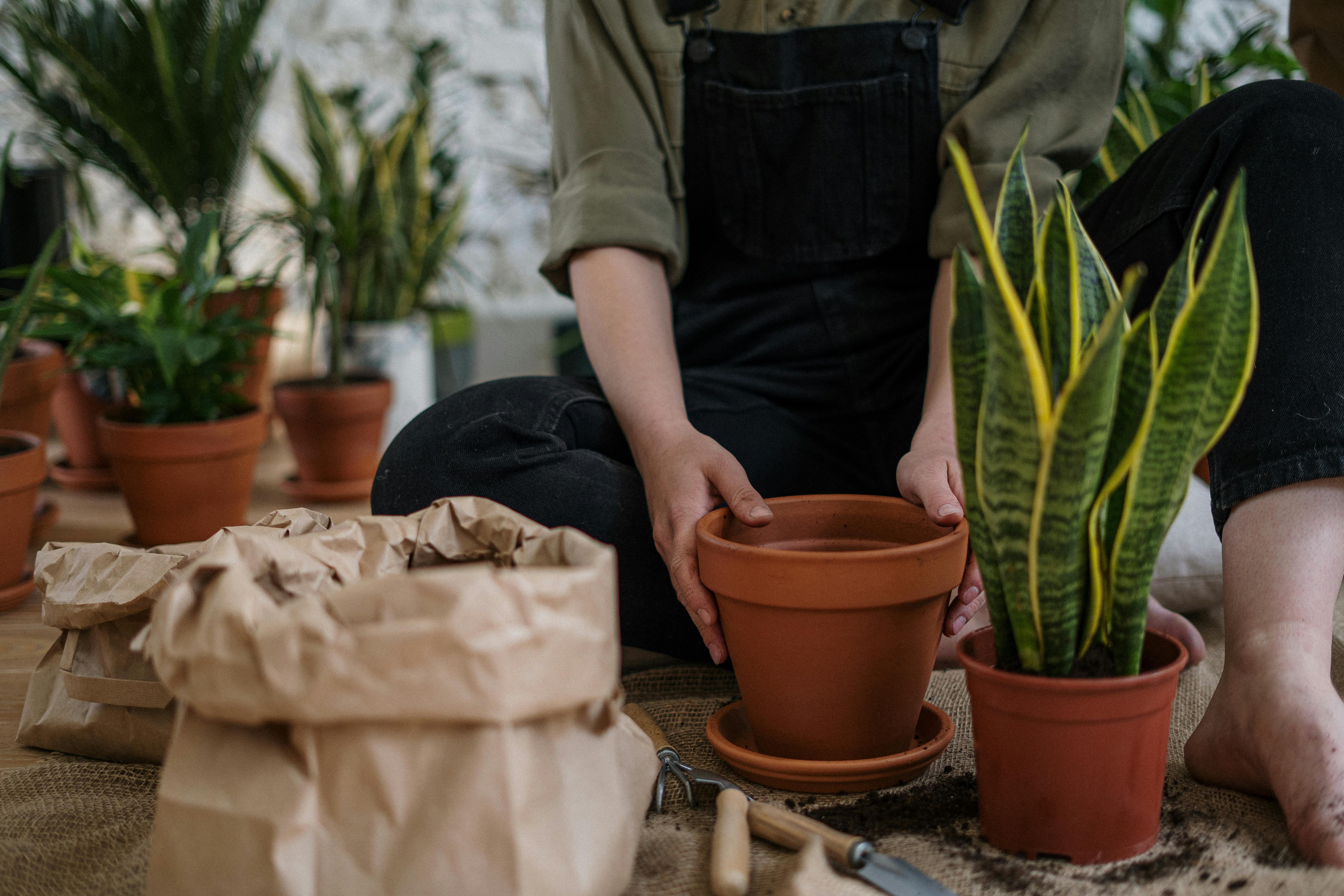
Terracotta is best when fast drying is your priority; plastic is best when low weight and flexibility matter. Glazed ceramic works when it has real drainage and you adjust watering to its slower drying. Penn State's repotting guidance notes that unglazed clay is porous, while plastic retains moisture longer.
| Material | Best for | Watch for | Verdict |
|---|---|---|---|
| Unglazed terracotta | Overwaterers, humid rooms, tall plants | Faster drying, breakage, mineral marks | Best drying margin |
| Plastic nursery pot | Cachepots, large plants, expanding clumps | Mix stays moist longer | Best practical inner pot |
| Glazed ceramic | Decorative use with a real drainage hole | Heavy, brittle, slower drying | Good if drainage works |
| Sealed decorative pot | Outer cachepot only | Hidden standing water | Never plant into it directly |
The material does not replace good technique. A small plastic pot with open holes and a loose mix can be safer than a huge terracotta pot full of dense soil. For a broader material comparison, see our terracotta vs plastic pot guide.
Does a Snake Plant Pot Need Drainage Holes?
Yes. A snake plant pot needs at least one open drainage hole, and several holes make drainage more reliable. RHS specifically recommends plenty of drainage holes and tells growers to pour away water collected in a saucer or outer pot. This matters because the plant needs a well-drained mix and is vulnerable to overwatering.
If you love a sealed decorative planter, use it as a cachepot. Keep the plant in a separate nursery pot with holes. Remove the inner pot for watering, let it drain at the sink, and return it only after water stops running. Then check the cachepot and empty any water that collected inside.
Adding gravel to a sealed pot does not give excess water an exit. It only creates a hidden reservoir below the mix. Our guide to houseplant drainage holes explains why a removable inner pot is the safer decorative solution.
When Should You Repot a Snake Plant?
Repot when the plant is genuinely crowded, not on a fixed annual schedule. Strong signs include roots growing through drainage holes, a pot that bulges or cracks, a root ball with little visible mix, and water racing through because roots occupy most of the container. The RHS says newly purchased snake plants may remain happy in their original containers for years.
Spring is a convenient time because active growth helps roots settle into fresh mix. Still, a cracking pot or active rot is an immediate problem. Do not wait for a preferred season if the container is failing or the roots are unhealthy.
A low-stress repotting sequence
- Confirm the need: Inspect the root ball instead of guessing from leaf size.
- Pick the next size: Choose a cleaned pot only 1-2 inches wider, with open holes.
- Use fresh mix: Select a loose, well-drained potting mix. Avoid garden soil indoors.
- Keep the crown level: Replant at the same depth instead of burying leaf bases.
- Water and drain: Settle the mix once, allow excess water to leave, and empty the saucer.
- Recheck slowly: Let the mix approach dry before the next watering.
If the plant came home recently but is not root-bound, leave it in the nursery pot while it adjusts. Our guide to repotting plants after buying helps separate a true container problem from normal acclimation.
What Do Common Snake Plant Pot Problems Look Like?
Pot trouble usually shows up as a pattern, not one dramatic symptom. Mix that remains wet for a long time points to excess volume, slow material, blocked drainage, or poor light. A leaning plant may simply need more weight at the base. A distorted container points to an expanding rhizome that needs attention.
| What you notice | Likely pot issue | Best next check |
|---|---|---|
| Mix stays wet much longer than before | Pot too large, hole blocked, or cachepot holding water | Inspect drainage and root-ball fit before watering again |
| Plant tips easily | Pot too light or base too narrow | Add a heavy cachepot; do not add excess soil for weight |
| Pot bulges or cracks | Rhizomes have filled the container | Divide the clump or move up one size |
| Roots emerge from holes | Plant may be pot-bound | Slide it out and check whether roots fill the mix |
| Water sits inside outer pot | Inner pot did not drain fully | Empty, dry, and increase the gap beneath the nursery pot |
Do not diagnose root rot from a yellow leaf alone. Check the root zone. Healthy roots and rhizomes feel firm. Soft, dark, foul-smelling tissue needs prompt removal and a clean, better-fitting pot. Pair the container with a loose mix using our houseplant soil selection guide.
Which Pot Setup Fits Your Snake Plant?
Match the setup to the plant and to your habits. A compact rosette, a tall mature clump, and a fast-spreading collection plant create different stability and handling needs. The best pot keeps the root zone appropriately sized while making watering easy to repeat.
| Situation | Recommended setup | Why it works |
|---|---|---|
| Small desk plant | Snug 4-5 inch terracotta pot with saucer | Fast drying with enough weight for a small rosette |
| Tall, top-heavy plant | Drained nursery pot inside a heavy, wide cachepot | Stable outside, easy to lift and drain inside |
| Grower who waters too often | Unglazed terracotta plus a gritty, well-drained mix | Reduces how long the root zone stays wet |
| Vigorous rhizome growth | Flexible plastic pot checked each spring | Shows distortion before brittle ceramic fails |
| Decorative planter without holes | Use only as a cachepot around a drained inner pot | Keeps style separate from root-zone drainage |
Frequently Asked Questions
Is terracotta always the best pot for a snake plant?
No. Unglazed terracotta is excellent when you want the mix to dry faster, but it can crack as rhizomes expand. A plastic nursery pot with drainage, placed inside a heavy cachepot, is a practical choice for vigorous plants or anyone who needs a lighter inner pot.
Do snake plants prefer deep or shallow pots?
Most snake plants do well in a standard or slightly squat pot that is wide enough for the rhizomes and heavy enough to steady the leaves. Match the pot to the root ball rather than the leaf height. Avoid a very deep container that leaves unused wet mix below shallow roots.
Can a snake plant crack its pot?
Yes. Snake plants spread by firm rhizomes that can distort plastic and crack brittle clay or ceramic when the plant becomes severely crowded. Check a bulging or misshapen pot promptly. You can divide the plant or move it one pot size up before the container fails.
Can I use a decorative pot without drainage?
Use a decorative pot without holes only as a cachepot. Keep the snake plant in a fitted nursery pot with drainage, remove it for watering, let it drain fully, and empty any water left in the outer pot. Do not plant directly into a sealed decorative container.
Sources and Further Reading
- Penn State Extension: Snake Plant, a Forgiving, Low-Maintenance Houseplant
- Royal Horticultural Society: How to Grow Sansevierias
- Penn State Extension: Repotting Houseplants
- University of Minnesota Extension: Spring Houseplant Care
- Missouri Botanical Garden: Dracaena trifasciata
The best pot for snake plant care is not the most expensive one. It is the container that fits the roots, drains every time, and stays steady in your space. Measure before you buy, choose one size up only when the roots demand it, and keep decorative choices outside the drained root zone.

About the Author
Written by Sage Avery, a plant care writer at Plant Companion Guide. For how we create and update content, see our editorial policy.