Growing Strawberries in Containers: Get a Real Patio Harvest
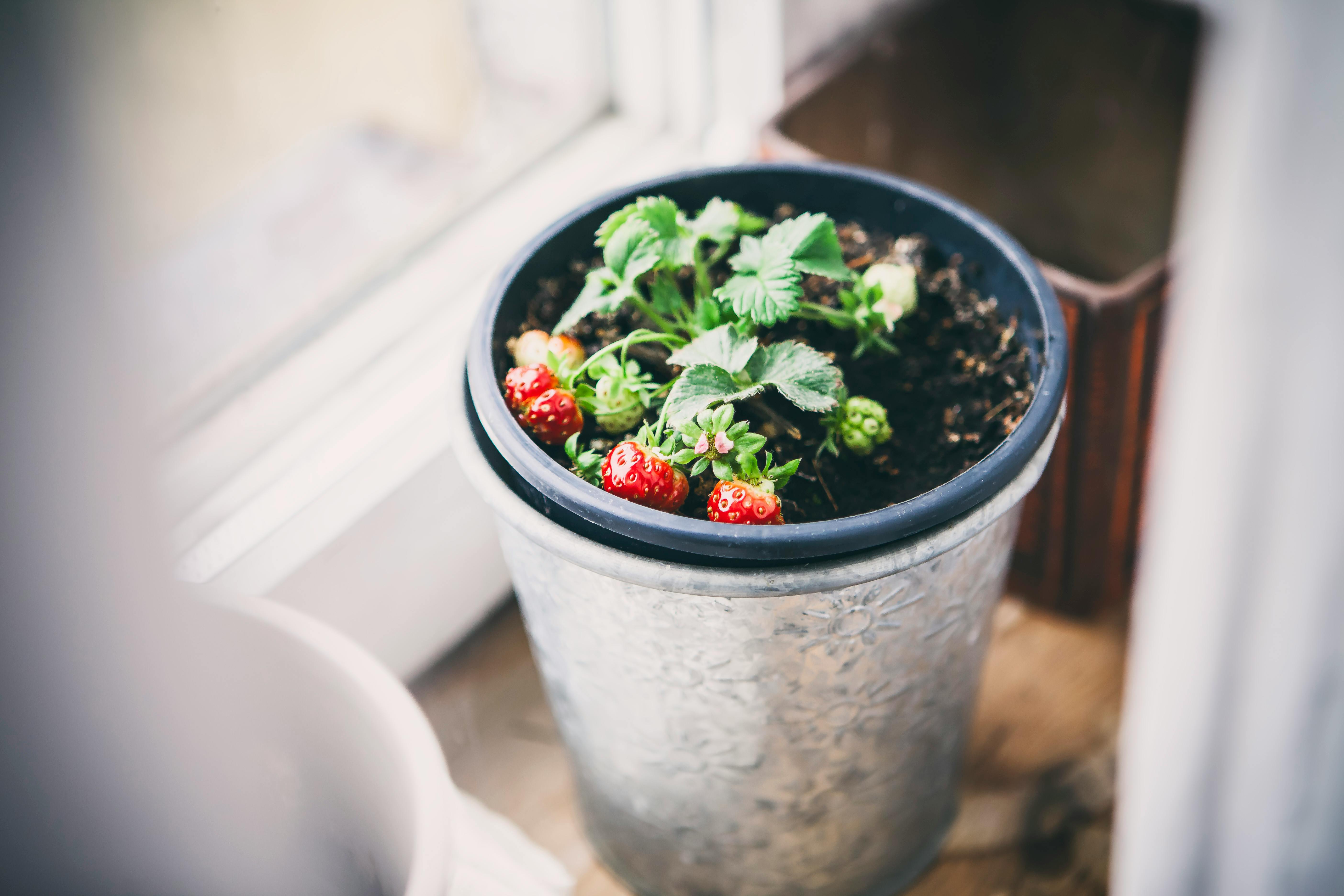
Growing strawberries in containers transformed my apartment balcony from a decorative afterthought into an actual food-producing space. My first season with two hanging strawberry bags and a large terra cotta pot produced more fresh strawberries than I could eat — though I made the rookie mistake of choosing a June-bearing variety ('Jewel') that gave me one intense two-week harvest and nothing more. The following year I switched to day-neutral varieties ('Albion' and 'Seascape'), which fruit continuously from May through October in my Zone 6 climate, and the balcony became a genuinely productive kitchen garden. The variety choice makes all the difference for container growing.
Choosing the Right Strawberry Variety for Containers
Strawberries are divided into three categories: June-bearing (one large harvest in late spring), everbearing (two harvests, early summer and fall), and day-neutral (continuous fruiting from spring through fall regardless of day length). For container growing where space is limited and you want maximum return from your investment, day-neutral varieties are the clear choice. 'Albion', 'Seascape', 'San Andreas', and 'Tristar' are reliable day-neutral performers that produce consistently through the growing season without the single-peak-and-done pattern of June-bearing types.
Alpine strawberries (Fragaria vesca) — small, intensely flavored, and incredibly productive — are an excellent container choice that fruits prolifically all season with minimal management. They don't produce runners, making them tidy container plants. For June-bearing varieties if you want the classic, intensely sweet large berry, 'Jewel', 'Earliglow', and 'Honeoye' are reliable performers, but accept the single-harvest pattern as a trade-off for fruit quality. According to University of Minnesota Extension's strawberry growing resources, day-neutral varieties are increasingly recommended for container and small-space growing precisely because their continuous fruiting pattern maximizes production per plant over the entire season.
Container Selection and Soil
Strawberries need containers with excellent drainage — waterlogged roots cause crown rot rapidly. Choose containers at least ten to twelve inches deep and wide. For multiple plants, a long rectangular planter, a fabric grow bag, or a strawberry tower gives more planting sites per square foot of patio space. Fabric grow bags are excellent choices: they drain freely, air-prune roots to prevent root-circling, and fold for compact off-season storage. Classic strawberry pots (terra cotta with side pockets) are charming but can dry out rapidly in hot weather — the side pockets are particularly susceptible to drought stress.
Use a lightweight potting mix that drains freely but retains some moisture — a standard potting mix with the addition of perlite works well. Avoid heavy garden soil or pure compost, which compact in containers and impede drainage. Position plants with the crown (the junction of roots and leaves) at or just above the soil surface — planting too deep rots the crown; planting too shallow dries it out. Space plants six to eight inches apart in larger containers.
Watering, Fertilizing, and Feeding
Strawberries in containers need more frequent watering than in-ground plants — especially in summer heat, they may need daily water. Check the soil moisture every morning by touching the surface; water when the top inch is dry. Consistent moisture is especially critical during fruit development — uneven watering causes small, misshapen fruits. Mulching the soil surface with straw or wood chips reduces evaporation significantly, particularly in side-pocket strawberry pots that dry out quickly.
Fertilize every two to three weeks during the growing season with a balanced liquid fertilizer (such as 10-10-10 or a dedicated fruit and vegetable formula). Container plants deplete their nutrients faster than in-ground plants because frequent watering leaches fertilizer from the pot. Switch to a lower-nitrogen, higher-phosphorus fertilizer (like a tomato-type formula) once plants begin to flower, to support fruit development over vegetative growth. For more on container fertilizing strategies, see our complete container fertilizing guide. For patio growing ideas beyond strawberries, visit our vertical garden guide.
Runner Management and Overwintering
Strawberry runners (the long stems that extend from the mother plant and form new plantlets) are the plant's natural propagation mechanism. In containers, runners are largely a nuisance — they divert energy from fruit production and quickly overcrowd the container. Clip runners as they appear throughout the season unless you want to propagate new plants. Potting up a few runners each year provides free replacement plants — strawberry plants become less productive after three to four years and benefit from systematic replacement with younger plants.
Overwintering container strawberries requires protecting the roots from freezing solid, which kills the crown. In USDA Zones 6 and warmer, mulching heavily (four to six inches of straw over the container) or moving pots to an unheated garage through winter protects adequately. In Zones 5 and colder, bring pots into an insulated space (unheated basement or garage where temperatures stay above 20°F / -7°C) for winter dormancy. Keep the soil barely moist through winter — not wet, not completely dry. Bring back outdoors gradually in spring as overnight temperatures reliably stay above 28°F (-2°C). According to The Old Farmer's Almanac's strawberry growing guide, overwintering in containers extends productive plant life significantly compared to starting fresh transplants each year.
Common Mistakes to Avoid
- Choosing June-bearing varieties for continuous harvest: Select day-neutral types for season-long fruiting in limited container space.
- Planting the crown too deep: Crown rot is the leading cause of container strawberry failure. The crown must sit at or just above the soil surface.
- Using classic strawberry pots without careful watering management: Side pockets dry out rapidly; daily monitoring is required in hot weather.
- Allowing runners to run unchecked: Runners deplete fruiting energy. Remove them unless you're deliberately propagating replacements.
- Leaving containers outside exposed through hard winters: Containers don't provide the thermal mass that protects in-ground roots. Move or mulch heavily before hard freezes.
Quick Reference Strawberry Container Care Table
| Factor | Recommendation |
|---|---|
| Best varieties | Day-neutral: 'Albion', 'Seascape', 'Tristar', alpine types |
| Container minimum | 10–12 inches deep and wide; fabric bags ideal |
| Soil | Well-draining potting mix + perlite |
| Sun requirement | 6–8 hours direct daily |
| Watering | Daily in summer heat; check soil every morning |
| Fertilizer | Balanced liquid every 2–3 weeks; switch to high-P at flowering |
| Runner management | Remove promptly to maintain fruiting vigor |
| Overwintering | Insulated garage or heavy mulch; Zone 6+ easier |
Frequently Asked Questions
How many strawberry plants do I need for a meaningful harvest?
For a continuous supply of fresh strawberries (a handful per day through the season), plan for six to eight day-neutral plants per person. Day-neutral varieties like 'Albion' produce roughly one pint per plant per month across a five-to-six-month season under good conditions. Starting with a dozen plants in two or three containers gives a family of two a genuinely useful harvest rather than a tasting experience.
Why are my container strawberries producing small or misshapen fruit?
Small or misshapen berries typically result from poor pollination, inconsistent moisture, or inadequate nutrition. Ensure flowering plants are outdoors or in an area where bees can access flowers — indoor or enclosed containers may need hand pollination (gently brush a small paintbrush between flowers to transfer pollen). Consistent soil moisture prevents the distorted "catfacing" that develops from moisture stress during fruit development. If plants are heavy runners with many berries but all small, remove excess runners and some of the smaller developing fruits to allow the remaining ones to size up properly.
Can I grow strawberries on a north-facing balcony?
Strawberries need six to eight hours of direct sunlight for productive fruiting — a north-facing balcony that receives no direct sun will produce very sparse fruit and is not suitable. If your balcony faces north but receives significant reflected light or indirect bright light for most of the day, alpine strawberry varieties are the most shade-tolerant choice, but yields will still be significantly less than in direct sun. South, east, or west-facing balconies are all suitable; south-facing is ideal.
Container strawberries on a patio or balcony are one of the most rewarding small-space food garden projects possible — compact, beautiful, and producing real, genuinely superior-to-grocery-store fruit from late spring through fall. Start with the right variety, get your watering consistent, and you'll be harvesting strawberries from your patio within weeks of planting. Drop your strawberry growing questions in the comments below.

About the Author
Sage Avery is a passionate gardener and plant enthusiast sharing tips for a greener life.