ZZ Plant Low Light: How Dark Is Too Dark?
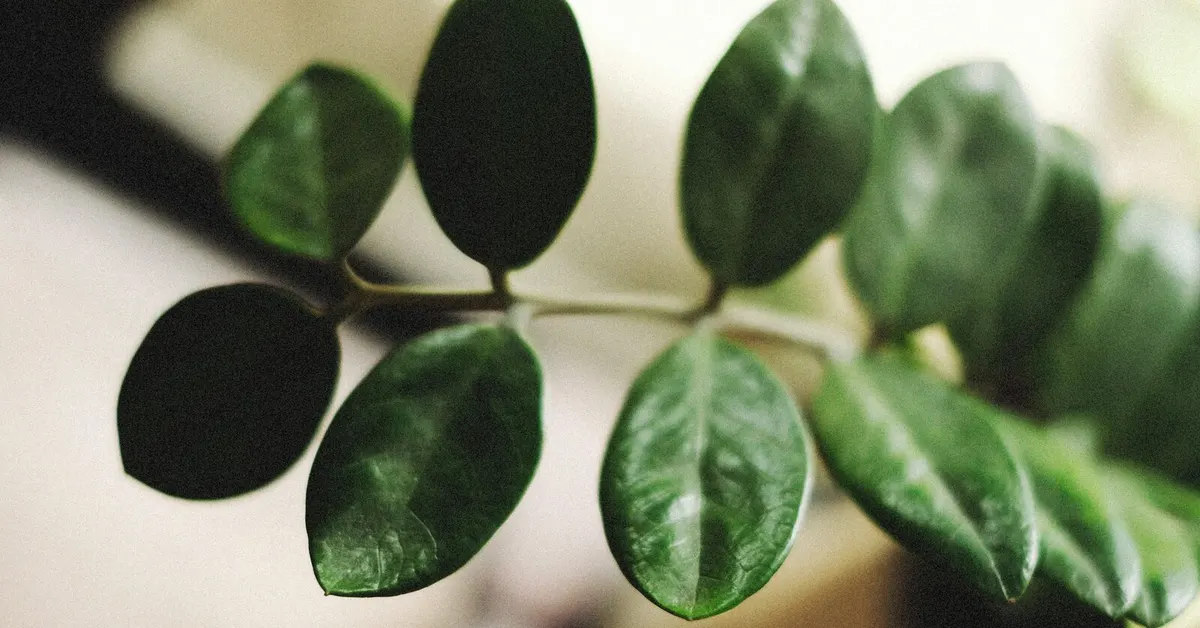
A ZZ plant can live in low light, but it cannot live in darkness. Zamioculcas zamiifolia is unusually tolerant of dim rooms because it grows slowly and stores water in thick underground rhizomes. Its healthiest, fullest growth still comes in bright indirect light. In a very dark corner it may survive for a long time while producing few new shoots, leaning toward the window, and using water so slowly that overwatering becomes the larger danger.
The honest test is not whether you can read in the room. It is whether the leaves receive useful light for much of the day and whether the plant is maintaining firm stems, normal-sized leaflets, and occasional new growth. If a room has no window and its electric lights are usually off, add a grow light or choose another location.
Quick answer
- Bright indirect light is best for steady, compact ZZ growth.
- Low light is workable, but growth and water use slow sharply.
- A windowless office can work only while adequate electric lighting is on.
- Darkness is too dark, even if an established plant appears fine for months.
What Does Low Light Mean for a ZZ Plant?
Low light is a measurable condition, not a room label. The University of Minnesota Extension places low indoor light at roughly 50 to 250 foot-candles and notes that plants in low light grow more slowly and use less water. That range is about 540 to 2,690 lux. Readings change through the day, so one bright moment at noon does not describe the whole location.
| Location | What to expect | Best decision |
|---|---|---|
| Bright indirect light near a filtered east, west, or south window | Best chance of regular shoots, balanced stems, and quicker dry-down | Ideal permanent placement |
| Low natural light near a north window or several feet from a brighter window | Slower growth, longer wet-soil intervals, possible leaning | Acceptable if the plant stays stable |
| Windowless office with bright lights on through the workday | Survival is possible; growth depends on intensity and distance | Monitor new growth and add a grow light if needed |
| Windowless room with lights usually off | The plant spends stored energy without replacing it | Too dark for permanent placement |
| Direct hot afternoon sun | Leaf scorch risk, especially after a sudden move | Filter the light or move the plant back |
North Carolina State Extension describes ZZ as able to tolerate very low light and fluorescent lighting while performing best in bright indirect light. UConn Home & Garden Education Center makes the same distinction: a windowless office can be workable with fluorescent light for several hours, but low light also makes an already slow plant grow more slowly. “Tolerates” is not the same promise as “thrives.”
How Can You Tell Whether Your Spot Is Too Dark?
Stand where the leaves will sit and look at the source, not at the room. A window that seems bright from across the room may deliver little usable light after distance, overhangs, trees, blinds, and seasonal sun angle take their share. A free phone light-meter app can help compare two spots, but treat the number as an estimate because phone sensors are not calibrated horticultural meters.
- Measure at leaf height. Face the sensor toward the main light source without shading it with your body.
- Check morning, midday, and late afternoon. A low reading all day is more meaningful than one short peak.
- Photograph the plant monthly. Use the same angle so leaning, gaps, and smaller new leaves are easy to compare.
- Track pot dry-down. Record when you water and when the mix becomes mostly dry again.
- Judge new growth. Old leaves can stay green while the plant quietly stops producing healthy new shoots.
A simple shadow check also helps. At midday, hold your hand about a foot above a pale surface beside the plant. A soft but visible shadow suggests useful indirect light. No discernible shadow suggests a very dim position. A hard-edged shadow means stronger light and may signal direct sun, which should be introduced gradually.
What Happens When a ZZ Plant Stays in Very Low Light?
The first change is usually not yellow leaves. It is inactivity. New shoots arrive less often, stems may angle toward the source, and new leaflets can be smaller or more widely spaced. The plant is conserving resources. That is why a recently purchased ZZ can look unchanged in a dark corner for months: mature foliage and stored reserves hide the light deficit.
Very low light also changes the risk calculation around water. Photosynthesis and evaporation slow, so the pot stays damp longer. The rhizomes that make ZZ drought-tolerant are vulnerable when airless mix remains wet. Do not compensate for slow growth with extra water or fertilizer. Improve the light first.
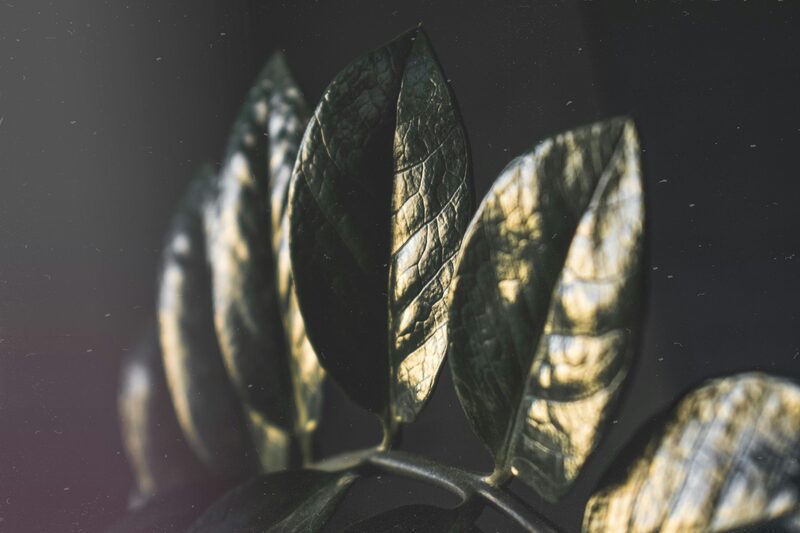
Light also matters to cultivar appearance. Raven ZZ is the same species with much darker mature foliage, but useful light supports stronger growth and the most dramatic color. If you are choosing between forms, our Raven ZZ versus regular ZZ comparison separates the cosmetic differences from the care they share.
How Should You Water a ZZ Plant in Low Light?
Water by soil condition and pot weight, not by a repeating date. Push a wooden skewer or finger well below the surface, lift the pot to learn its dry weight, and wait until the mix is dry through most of the root zone. Then water thoroughly until excess exits the drainage hole and empty the saucer or cachepot.
Do not turn “drought tolerant” into tiny sips. Small top-ups can leave a misleading dry crust over damp lower soil, while never wetting the full root ball evenly. A complete soak followed by a substantial dry-down gives the roots both water and air. If you are unsure which direction the plant is moving, use the side-by-side symptoms in our overwatering versus underwatering guide.
- Wait longer in dimmer locations. The interval may change with season, temperature, pot size, and soil, so no fixed number of days is reliable.
- Keep drainage open. A decorative outer pot must not hold runoff around the nursery pot.
- Skip moisture-retentive upgrades. A much larger pot or dense mix stays wet longer than the roots can use it.
- Do not fertilize a stalled plant. Fertilizer cannot replace light and may add stress when growth is minimal.
When Should You Add a Grow Light?
Add a grow light when the room has no useful daylight, when stems keep leaning after you rotate the pot, or when a full growing season passes with weaker new growth. It is also the cleanest solution when the best natural-light location is unsafe for pets or blocks a walkway.
Place the fixture close enough that its light reaches the leaves, following the maker's distance guidance, and use a timer for a consistent daytime period. Increase exposure gradually if the plant has spent months in deep shade. The goal is not to blast it with heat or intense direct light; it is to provide a dependable daily supply of moderate light.
If several plants need a dim-room solution, compare their tolerance and growth habits in our guide to the best low-light houseplants. The ZZ is one of the strongest candidates, but it still benefits from the brightest suitable place you can give it.
Low-Light ZZ Plant Troubleshooting
| What you see | Most useful interpretation | What to do next |
|---|---|---|
| No new shoots, but firm green stems | The plant may be stable but growing very slowly | Compare light readings and watch the next growth cycle |
| Stems lean strongly toward one side | The main light source is weak or one-sided | Move closer, rotate periodically, or add overhead light |
| New growth is thin or unusually small | Light may be insufficient for balanced new tissue | Increase indirect light and reassess future shoots |
| Yellow lower leaves with persistently wet soil | Water use is slower than the watering routine | Pause watering, check drainage, and inspect roots if decline continues |
| Bleached or crisp patches after a move | Sudden direct sun exposure is more likely than low light | Return to filtered light and acclimate gradually |
| Soft stem base, odor, or collapsing rhizomes | Root or rhizome decay is possible | Unpot, remove decayed tissue, and repot firm healthy sections |
Is a ZZ Plant Safe Around Pets?
Keep ZZ plants away from pets and small children. The ASPCA includes ZZ plant among houseplants that can cause trouble for pets and explains that its needle-shaped calcium oxalate crystals can irritate the mouth and gastrointestinal tract. Drooling, pawing at the mouth, reduced appetite, or vomiting after chewing warrants a call to your veterinarian or animal poison-control service.
This matters in low-light planning because placing the pot on the floor under a desk or in a quiet corner can make it easier for a curious cat or dog to reach. Use a stable elevated stand, a closed room, or another pet-inaccessible location that still receives adequate light.
Frequently Asked Questions
Can a ZZ plant live in a room with no windows?
A ZZ plant can live in a windowless room only if it receives adequate electric light. Ordinary office lighting may sustain it when it is on for much of the day, but a dark room with no window and no electric light is not a viable permanent location.
How can I tell if my ZZ plant needs more light?
Watch for very long gaps between new shoots, thin or leaning stems, smaller new leaflets, and soil that stays wet for an unusually long time. Move the plant closer to a window or add a grow light, then judge new growth rather than expecting old stems to change.
Should I water a ZZ plant less in low light?
Usually, yes. A ZZ plant uses water more slowly in low light, so fixed calendar watering raises the risk of saturated soil and damaged rhizomes. Let the potting mix dry well, confirm the pot feels lighter, then water thoroughly and drain the excess.
Is a regular lamp enough for a ZZ plant?
A bright white LED can contribute useful light when it is close enough and aimed at the leaves, but a distant decorative lamp often adds very little. A purpose-built grow light on a timer is easier to position and evaluate in a genuinely dark room.
Sources and Editorial Notes
This guide was checked against North Carolina State Extension's ZZ plant profile, the UConn ZZ plant factsheet, the University of Minnesota Extension indoor-light guide, and the ASPCA's pet-safety guidance. Light readings are useful comparisons, not a guarantee: window direction, season, glass, fixture output, and distance all affect the light that reaches a leaf.

About the Author
Written by Sage Avery, a plant care writer at Plant Companion Guide. For how we research and update our advice, see our editorial policy.